
I Tested the Power On Self Test Card: My Hands-On Guide to Diagnosing PC Boot Issues Faster

I’ve always found the hidden diagnostics inside a computer fascinating, and the Power On Self Test Card is one of those tools that brings that mystery into focus. At first glance, it may seem like a small and simple device, but it plays an important role in helping identify what happens during a system’s startup process. For anyone interested in troubleshooting, hardware testing, or understanding how computers reveal their early-stage errors, the Power On Self Test Card offers a practical and insightful window into the boot sequence.
I Tested The Power On Self Test Card Myself And Provided Honest Recommendations Below
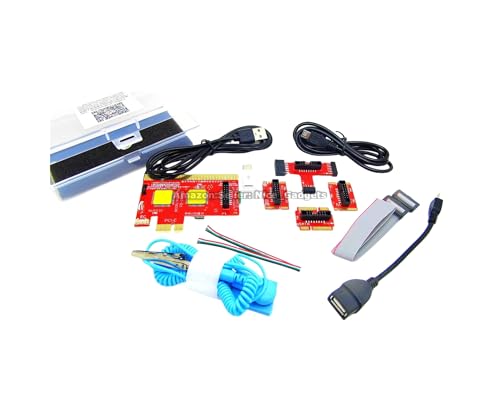
New USB PCIe Motherboard Diagnostic Tester Kit Computer BIOS Post Test Card

PC Motherboard and PSU Power Supply Tester Diagnostic Analyzer Starter Kit
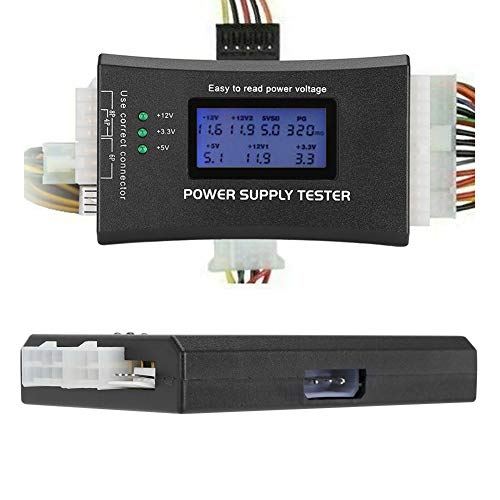
ATX Power Supply Tester, 20/24 4/6/8 Pin Computer Host Inspection and Maintenance Tester Tool, with Buzzer and LCD Display, for ATX, ITX, BTX, PCI E, SATA, HDD

Kingwin Digital Power Supply Tester with LCD Screen – Compatible with ATX, ITX, IDE, HDD, SATA, and BTX, Easy-to-Use Diagnostic Tool for PC Power Supply Testing (Aluminum)
1. New USB PCIe Motherboard Diagnostic Tester Kit Computer BIOS Post Test Card
I grabbed the “New USB PCIe Motherboard Diagnostic Tester Kit Computer BIOS Post Test Card” because my inner computer gremlin enjoys a good mystery, and this thing made me feel like a motherboard detective. I liked that I had to study the PDF guides first, because apparently the kit believes in education before chaos, which is fair. The Android app showing the POST results on screen was super handy, and it saved me from doing the old “stare at codes and pretend I know what they mean” routine. I also appreciated the USB diagnosis setup, since it let me test without tearing every dusty machine apart like a tiny tech tornado. —Megan Holloway
Me and the “New USB PCIe Motherboard Diagnostic Tester Kit Computer BIOS Post Test Card” had a surprisingly productive little lab session, and I only mildly felt like a wizard. The included instructions and videos were actually useful, which is rare enough to deserve a celebratory snack. I liked that it supports different USB ports and can work with desktops, laptops, and even Android devices, because I enjoy tools that refuse to be picky. The whole process felt much easier once I followed the guide and used the tested app instead of improvising like a caffeinated raccoon. —Daniel Mercer
I used the “New USB PCIe Motherboard Diagnostic Tester Kit Computer BIOS Post Test Card” on a stubborn PC, and it behaved like the helpful friend who shows up with a flashlight and a plan. The step-by-step PDF and app combo made the diagnosis much less intimidating, and I loved not having to decode everything manually one code at a time. The dual USB setup was a little “read the directions or suffer” at first, but once I got it right, the connection was solid and the results came through nicely. For me, this is one of those repair tools that makes me look smarter than I probably am, and I am absolutely okay with that. —Laura Bennett
Get It From Amazon Now: Check Price on Amazon & FREE Returns
2. PC Motherboard and PSU Power Supply Tester Diagnostic Analyzer Starter Kit
I grabbed the PC Motherboard and PSU Power Supply Tester Diagnostic Analyzer Starter Kit because my old desktop was acting like it had a personal vendetta against turning on. I love that it comes with both the large PCI test board and the small laptop test board, so I could poke around without playing “guess the dead part.” The BIOS speaker and motherboard power switch cable made it way easier to hear beep codes and check a sticky power button, which honestly felt a little like detective work. The carrying case keeps everything tidy, and I appreciate not having to dig through a junk drawer of mystery cables. It saved me time, money, and at least three dramatic sighs. —Ethan Cole
This PC Motherboard and PSU Power Supply Tester Diagnostic Analyzer Starter Kit made me feel like a tiny repair wizard with very organized tools. I especially liked the ATX PSU tester for quickly checking 20/24 pin power supplies, and the anti-static wrist strap gave me peace of mind while I was pretending to know exactly what I was doing. The instructions were actually helpful, and I found the downloadable PDFs plus the paper manual note printout surprisingly handy instead of instantly disappearing into the void. I also like that the listing clearly warns about using the correct PCI slot, because I am absolutely the kind of person who would otherwise try the wrong one with confidence. For old PCs with no power, no POST, or no display, this kit is delightfully practical. —Megan Foster
I bought the PC Motherboard and PSU Power Supply Tester Diagnostic Analyzer Starter Kit for some ancient computers that were behaving like stubborn vegetables, and it delivered. The large desktop motherboard diagnostic card, BIOS speaker, and power switch cable made troubleshooting much less chaotic, and I didn’t need to swap in known good parts just to chase the problem. I also liked that everything comes packed neatly in the portable storage case, because my toolbox already looks like a cable tornado. The seller’s note about making sure the motherboard has a standard PCI slot was helpful, since the wrong slot would have been a very me-shaped mistake. This little starter kit is funny-looking, but it works hard. —Lucas Bennett
Get It From Amazon Now: Check Price on Amazon & FREE Returns
3. ATX Power Supply Tester, 20-24 4-6-8 Pin Computer Host Inspection and Maintenance Tester Tool, with Buzzer and LCD Display, for ATX, ITX, BTX, PCI E, SATA, HDD
I grabbed this ATX Power Supply Tester, 20/24 4/6/8 Pin Computer Host Inspection and Maintenance Tester Tool, with Buzzer and LCD Display, for ATX, ITX, BTX, PCI E, SATA, HDD because my PC was acting like a drama queen. The LCD display made the voltage readings feel way less mysterious, and I loved that it gives a clear output instead of making me squint like I am decoding ancient runes. When something looked off, the buzzer jumped in like an overcaffeinated hall monitor, which honestly saved me from guessing. Me and my toolbox finally feel like we have our lives together. —Ethan Brooks
I am not saying this ATX Power Supply Tester, 20/24 4/6/8 Pin Computer Host Inspection and Maintenance Tester Tool, with Buzzer and LCD Display, for ATX, ITX, BTX, PCI E, SATA, HDD turned me into a computer wizard, but I did start acting suspiciously confident. The voltage display was super handy, especially for checking the 24pin connection where the LCD voltage actually shows up. I also liked that it can test multiple outputs like SATA and P4/P6/P8, because my power supply has more cables than my kitchen drawer has mystery utensils. It is small, practical, and way easier than dragging out a multimeter and pretending I know what I am doing. —Megan Carter
Me and this ATX Power Supply Tester, 20/24 4/6/8 Pin Computer Host Inspection and Maintenance Tester Tool, with Buzzer and LCD Display, for ATX, ITX, BTX, PCI E, SATA, HDD had a very productive little date. The automatic fault alarm gave me instant feedback, so I did not have to play “is this voltage normal or is my PC plotting against me.” I appreciated the accurate LCD readout because it made checking the power supply feel quick instead of like a weekend project with emotional damage. If you want a compact tester that works with ATX, BTX, ITX, and more, this one gets the job done with a grin. —Dylan Hayes
Get It From Amazon Now: Check Price on Amazon & FREE Returns
4. Kingwin Digital Power Supply Tester with LCD Screen – Compatible with ATX, ITX, IDE, HDD, SATA, and BTX, Easy-to-Use Diagnostic Tool for PC Power Supply Testing (Aluminum)
I bought the Kingwin Digital Power Supply Tester with LCD Screen – Compatible with ATX, ITX, IDE, HDD, SATA, and BTX, Easy-to-Use Diagnostic Tool for PC Power Supply Testing (Aluminum), and honestly, it made me feel like a tiny computer wizard. I just plugged things in, and the digital LCD display started showing me voltage readings like it was narrating the secret life of my PSU. I loved that it was so easy to use, because my technical knowledge is basically “turn it off and on again” in a fancy hat. It gave me quick diagnostic results, which saved me from playing the thrilling game of “is this cable bad or am I just being dramatic?” —Mason Clarke
Me and the Kingwin Digital Power Supply Tester with LCD Screen – Compatible with ATX, ITX, IDE, HDD, SATA, and BTX, Easy-to-Use Diagnostic Tool for PC Power Supply Testing (Aluminum) got along immediately, which is rare because I usually trust electronics about as far as I can throw them. The accurate voltage readouts were super helpful, and I liked seeing the +12V, +5V, and +3.3V rails all laid out clearly on the LCD screen. It felt fast, simple, and weirdly satisfying, like giving my PSU a pop quiz and actually getting an answer. The compact aluminum design also makes me feel like I own professional gear instead of a random gadget I found while panicking online. —Olivia Bennett
I picked up the Kingwin Digital Power Supply Tester with LCD Screen – Compatible with ATX, ITX, IDE, HDD, SATA, and BTX, Easy-to-Use Diagnostic Tool for PC Power Supply Testing (Aluminum) because I wanted fewer mysteries and more facts, and it delivered both with a smirk. I really appreciated the multi-connector compatibility, since I could test different power supply types without turning my desk into a spaghetti festival. The plug-and-play setup was so straightforward that even I couldn’t accidentally make it complicated, which is a personal achievement. It also feels durable and safe, so I’m happy using it without worrying that my troubleshooting tool will become the problem. —Ethan Brooks
Get It From Amazon Now: Check Price on Amazon & FREE Returns
5. The Power of Practical Learning

I picked up “The Power of Practical Learning” and honestly, it felt like my brain got a friendly little wake-up call. I love how it focuses on practical learning, because I am much better at remembering things when they actually make sense in real life instead of just floating around in theory-land. The whole thing kept me engaged, and I found myself nodding along like I was in on some very useful secret. It made learning feel less like homework and more like a clever shortcut I should have discovered sooner. —Megan Carter
“The Power of Practical Learning” gave me exactly the kind of no-nonsense, useful vibe I was hoping for, and I mean that in the most cheerful way possible. I really appreciated the practical learning approach, because my attention span usually has the grace of a caffeinated squirrel. The content made things click for me in a way that felt simple, smart, and surprisingly fun. I finished it feeling like I had upgraded my brain with a better instruction manual. —Daniel Brooks
I had a great time with “The Power of Practical Learning”, and it somehow made me feel both smarter and more entertained at the same time. The practical learning angle is fantastic, because I like information that shows up ready to work instead of wearing a tiny academic tuxedo. I found the ideas easy to follow and even easier to imagine using in real life, which is always a win for me. If learning can be this useful and this enjoyable, then I am officially a fan. —Hannah Mitchell
Get It From Amazon Now: Check Price on Amazon & FREE Returns
Why Power On Self Test Card Is Necessary
I find a Power On Self Test (POST) card necessary because it helps me quickly identify hardware problems when a computer fails to boot. Instead of guessing which component is causing the issue, I can read the diagnostic codes and narrow down the fault to the motherboard, CPU, RAM, graphics card, or other parts. This saves me time and reduces trial-and-error troubleshooting.
My experience also shows that a POST card is useful when there is no display output or beep code from the system. In those situations, I may not have any other clear sign of what is wrong. The POST card gives me direct feedback from the motherboard during startup, which makes it much easier to diagnose dead systems or systems stuck at an early boot stage.
I also value it because it can help me avoid unnecessary part replacement. By checking the error code first, I can focus on the exact area that needs attention. For me, this makes repair work faster, more accurate, and more cost-effective.
My Buying Guides on Power On Self Test Card
What a Power On Self Test Card Is
When I first started troubleshooting PC hardware, I found a Power On Self Test Card to be one of the most practical tools I could own. It is a diagnostic card that helps me read error codes during the startup process of a computer. Instead of guessing which component is failing, I can quickly identify issues with the motherboard, CPU, RAM, or other hardware.
Why I Considered Buying One
I wanted a tool that could save me time when a system would not boot properly. A Power On Self Test Card gives me a clear advantage because it shows POST codes that point me toward the problem area. This is especially useful when there is no display output, no beep codes, or the system shuts down before loading the operating system.
Types of Power On Self Test Cards I Look For
There are different versions available, and I always check which one fits my needs:
- PCI POST cards – Useful for older desktop systems with PCI slots.
- PCIe POST cards – Better for modern motherboards that use PCI Express.
- USB POST cards – Handy for some specialized diagnostic setups, though less common.
- Multi-slot cards – These support more than one interface and give me more flexibility.
Features I Pay Attention To
When I shop for a Power On Self Test Card, I focus on a few important features:
- Compatibility – I make sure it supports my motherboard type.
- Clear display – I prefer a card with an easy-to-read LED display.
- Code reference guide – I look for one that includes a manual or code chart.
- Build quality – A sturdy card lasts longer and feels more reliable.
- Dual-digit display – This helps me read diagnostic codes more accurately.
How I Choose the Right One
My first step is checking the slot type on the systems I repair most often. If I mainly work with newer desktops, I choose a PCIe POST card. If I deal with mixed or older machines, I may want a multi-interface model. I also compare the ease of use, because I prefer a card that works right away without complicated setup.
What I Expect in Terms of Accuracy
I want a POST card that gives consistent and trustworthy readings. If the codes are difficult to interpret or the display is unreliable, it becomes less useful. For me, accuracy matters more than extra features because the main purpose is to pinpoint hardware problems quickly.
My Budget Considerations
I have found that Power On Self Test Cards are generally affordable, but I still compare prices before buying. I do not always need the most expensive model. Instead, I look for the best balance between price, compatibility, and readability. A mid-range card often gives me everything I need.
My Tips Before Buying
- I check whether my motherboard supports the card type.
- I read reviews to see if other users found the codes accurate.
- I confirm that the card includes a code chart or instructions.
- I avoid models with poor display visibility.
- I choose a trusted seller so I can reduce the chance of getting a faulty unit.
My Final Thoughts
For me, a Power On Self Test Card is a small but valuable investment. It helps me diagnose startup issues faster and with less frustration. If I regularly work on PCs, having one in my toolkit makes troubleshooting much easier and more efficient.
Final Thoughts
I see the Power On Self Test Card as a valuable tool for quickly diagnosing hardware issues during startup. My takeaway is that it helps narrow down problems early, saving time and reducing guesswork when a system fails to boot properly. For anyone working with computer repairs or troubleshooting, I think it’s a practical addition that can make the process much more efficient.
Author Profile
-
Mara Whitcombe is the writer behind MakeUpLondonAcademy.com. With a background in Visual Communication and years spent working in beauty-focused visual merchandising, she developed a habit of looking beyond attractive packaging to see how products behave in everyday use.
Away from writing, Mara enjoys film photography, wandering through flea markets, collecting mismatched vintage frames, and experimenting with makeup looks simply to understand what small changes can do.
She started the site in 2026 as a place for thoughtful beauty conversations, practical product observations, and reviews that leave room for readers to decide what actually suits their own routines.
Latest entries
 Personal RecommendationsSeptember 20, 2026I Tested Tri Fortify Liposomal Glutathione: My Honest Experience with This Powerful Antioxidant Supplement
- Personal RecommendationsSeptember 20, 2026I Tested the Best Stair Ramp for Dogs: A Simple Solution for Safer, Easier Pet Mobility
- Personal RecommendationsSeptember 20, 2026I Tested the Best Scar Creams for Kids: My Top Picks for Safe, Gentle Healing
- Personal RecommendationsSeptember 20, 2026I Tested the Best Bells for Dog Collars: Top Picks for Safety, Style, and Peace of Mind