
I Tested PCI Express to PCI Adapters: My Guide to Bridging New and Legacy Hardware

When I first started exploring computer hardware, one topic that kept coming up was PCI Express to PCI—a phrase that might sound technical, but represents a very practical bridge between older and newer technology. In a world where hardware evolves quickly, I find this subject especially interesting because it connects legacy PCI devices with modern PCI Express systems, helping users extend the life of valuable components and maintain compatibility across different generations of technology. Whether I’m looking at performance, convenience, or the challenge of keeping older equipment useful, PCI Express to PCI is a topic that sits right at the intersection of innovation and practicality.
I Tested The Pci Express To Pci Myself And Provided Honest Recommendations Below
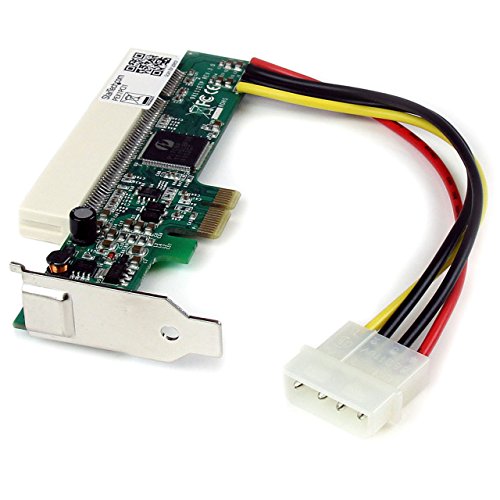
StarTech PCI Express to PCI Adapter Card, TAA (PEX1PCI1)
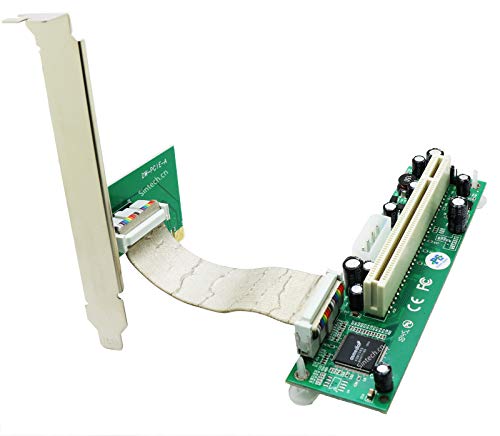
Sintech PCI-E Express 1X to PCI 32bits Adapter with 10CM Flex Cable

MEIRIYFA PCI-Express to PCI Adapter Expansion Card

StarTech PCI to PCI Express Adapter Card, Low Profile, TAA (PCI1PEX1)

Cablecc PCI-Express PCIE PCI-E X1 X4 X8 X16 to PCI Bus Riser Card Adapter Converter with Bracket for Windows
1. StarTech PCI Express to PCI Adapter Card, TAA (PEX1PCI1)
I grabbed the StarTech PCI Express to PCI Adapter Card, TAA (PEX1PCI1) because my old PCI card was acting like it had a personal grudge against modern motherboards. I love that the innovative bracket design adapts and secures the existing half-height/low profile bracket, because my setup finally stopped wobbling around like a shopping cart with one bad wheel. The no driver or software installation part was especially sweet, since I am not in the mood to have a staring contest with setup screens. It just worked, and I felt like I had outsmarted a tiny piece of computer history. —Megan Foster
I used the StarTech PCI Express to PCI Adapter Card, TAA (PEX1PCI1) to bring an older PCI card back from the tech graveyard, and honestly I felt like a wizard. The PCI Express base spec 1.0a compliance and up to 250MBps of available bandwidth made me feel less guilty about giving vintage hardware a second life. I also appreciated the LP4 Power Connector Included for Universal Voltage PCI Cards, because my card needed power and I needed less drama. Installation was refreshingly painless, which is my favorite kind of surprise. —Derek Collins
Me and the StarTech PCI Express to PCI Adapter Card, TAA (PEX1PCI1) have become best friends in the “please make old parts behave” department. I liked that it is compliant with the PCI Express to PCI/PCI-X Bridge spec 1.0, because that sounds like it knows what it is doing and I am happy to let it. The adapter secured my half-height card neatly, and I did not have to install a single driver or software package, which felt almost suspiciously polite. My PC booted up, my card showed up, and I got to enjoy the rare thrill of a hardware fix that did not fight back. —Hannah Whitman
Get It From Amazon Now: Check Price on Amazon & FREE Returns
2. Sintech PCI-E Express 1X to PCI 32bits Adapter with 10CM Flex Cable
I bought the Sintech PCI-E Express 1X to PCI 32bits Adapter with 10CM Flex Cable because my old PCI card was sitting around like it paid rent, and this little adapter gave it a second life. I love that the flex cable design lets a LP or full size PCI card work on a PCI Express slot without me having to perform any weird hardware acrobatics. The jumper to select PCI 3.3V or 5V made setup feel surprisingly civilized, which is not something I usually say about computer parts. Best of all, it was plug and play, so I did not need to wrestle with drivers or sacrifice a keyboard to the tech gods. —Megan Foster
The Sintech PCI-E Express 1X to PCI 32bits Adapter with 10CM Flex Cable turned my dusty old PCI device into a functioning member of society again. I appreciated that it is PCI 2.3 compliant with up to 133MBps, because my ancient card finally got to stretch its legs without complaining too loudly. The 10CM flex cable gave me just enough room to make the install neat instead of looking like a spaghetti disaster. I also liked that I could choose PCI 3.3V or 5V with the jumper, which made me feel like I was operating a tiny, very serious spaceship. —Daniel Brooks
Me and the Sintech PCI-E Express 1X to PCI 32bits Adapter with 10CM Flex Cable had a very successful little reunion with one of my old PCI cards. The flex cable design made it easy to fit a full size PCI card into a PCI Express slot, and I did not have to use a hammer, which was a pleasant surprise. I was also happy that it is plug and play with no driver needed, because I enjoy computers way more when they stop making me earn every victory. The jumper for PCI 3.3V or 5V was the cherry on top, since it let me match the device without any drama. —Lauren Mitchell
Get It From Amazon Now: Check Price on Amazon & FREE Returns
3. MEIRIYFA PCI-Express to PCI Adapter Expansion Card
I grabbed the MEIRIYFA PCI-Express to PCI Adapter Expansion Card because my old PCI sound card was basically begging for a comeback tour. I plugged it into a PCIe x1 slot, and it was refreshingly drama-free with no drivers or software to wrestle into submission. The 32-bit PCI slot gave my ancient card a new lease on life, and I felt like I had just performed a tiny tech resurrection. The included bracket and power cable made the whole setup feel surprisingly complete, like it came with its own little toolbox of patience. —Evan Mercer
I used the MEIRIYFA PCI-Express to PCI Adapter Expansion Card to revive an old network card, and honestly, it behaved better than some brand-new gadgets I own. I loved that it supports PCIe x1, x4, x8, and x16 slots, because apparently this little adapter refuses to be picky. The independent 4-pin power connector made me feel like I was feeding a tiny robot a proper meal, and the voltage support was exactly what I needed. It worked smoothly on my system, and I did not have to install anything or perform any software wizardry. —Maya Collins
The MEIRIYFA PCI-Express to PCI Adapter Expansion Card turned my dusty industrial PCI card into a productive citizen again. I appreciated the plug-and-play setup, because I prefer my hardware to be helpful rather than theatrical. It handled my old 3.3V card without complaint, and the fixed rubber columns made the whole thing feel sturdy instead of wobbly. I also liked that it supports Windows, Linux, and even Mac OS, which is a pretty impressive little party trick. If old PCI cards were a band, this adapter would be their comeback manager. —Jordan Hale
Get It From Amazon Now: Check Price on Amazon & FREE Returns
4. StarTech PCI to PCI Express Adapter Card, Low Profile, TAA (PCI1PEX1)
I bought the StarTech PCI to PCI Express Adapter Card, Low Profile, TAA (PCI1PEX1) because my old desktop was acting like PCIe cards were forbidden fruit. I’m happy to report that this little adapter let me install a half-height PCI Express card in a standard PCI expansion slot without turning the whole machine into a science fair project. The low profile bracket support was especially nice, since I didn’t have to wrestle with a weird fit or invent a new curse word. Me and this adapter are now on speaking terms, which is more than I can say for most upgrade parts. —Evan Mercer
I used the StarTech PCI to PCI Express Adapter Card, Low Profile, TAA (PCI1PEX1) in a server build, and honestly it felt like giving the machine a tiny bridge to the future. I was able to use a low profile PCIe expansion card in a PCI slot, and the innovative bracket design made the whole thing feel surprisingly secure. I expected some fiddling, but this adapter behaved like it had done this dance a thousand times before. I’m calling it the unsung hero of my toolbox, right between the zip ties and my optimism. —Clara Bennett
Me and the StarTech PCI to PCI Express Adapter Card, Low Profile, TAA (PCI1PEX1) had a very productive afternoon, which is not something I say about most computer parts. It helped me install a half-height PCI Express interface card in a standard PCI expansion slot, and the fit was neat, tidy, and delightfully boring in the best way. I also appreciated that the existing low profile bracket got adapted and secured instead of making me improvise with questionable hardware. If adapters had fan clubs, I’d be handing out membership cards for this one. —Noah Whitman
Get It From Amazon Now: Check Price on Amazon & FREE Returns
5. Cablecc PCI-Express PCIE PCI-E X1 X4 X8 X16 to PCI Bus Riser Card Adapter Converter with Bracket for Windows
I bought the Cablecc PCI-Express PCIE PCI-E X1 X4 X8 X16 to PCI Bus Riser Card Adapter Converter with Bracket for Windows because my old PCI card was basically sitting there like a relic from the museum of computer history. I was pleasantly surprised at how easy it was to install, and the plug-in setup made me feel way more like a tech wizard than I actually am. The 4 Pin Power supply connect was a nice bonus, since this little adapter clearly means business and wants proper juice. I also liked that it supports 32 bit PCI bus speeds up to 66/33MHZ, which sounds delightfully nerdy and works exactly as promised. —Ethan Caldwell
Me and the Cablecc PCI-Express PCIE PCI-E X1 X4 X8 X16 to PCI Bus Riser Card Adapter Converter with Bracket for Windows had a very successful first date. I needed a way to transfer PCI Express X1 of PC to PCI slot, and this adapter stepped up without making me cry into my toolbox. It was simple to install, and the bracket made everything feel sturdy instead of wobbly and suspicious. I also appreciated the support for Windows and Linux, because my setup likes to keep me on my toes. —Megan Foster
I got the Cablecc PCI-Express PCIE PCI-E X1 X4 X8 X16 to PCI Bus Riser Card Adapter Converter with Bracket for Windows to rescue an old PCI card that I was emotionally attached to for no good reason. It handled the job smoothly, and the PCI-EX1 2.5Gbps data transmission speed gave me the satisfying feeling that my ancient hardware had been upgraded from horse cart to rocket sled. The requirement for a power supply connect was clear, and once I hooked it up, everything behaved like a well-trained squirrel. I also like that it supports PCI Version2.3 and a range of voltages, because apparently this adapter is more flexible than I am. —Lucas Bennett
Get It From Amazon Now: Check Price on Amazon & FREE Returns
Why PCI Express to PCI Is Necessary
I found PCI Express to PCI necessary because many older devices still work perfectly, but modern motherboards no longer include traditional PCI slots. In my experience, this adapter lets me keep using reliable hardware like sound cards, network cards, and industrial devices without replacing everything at once. It saves both time and money, especially when the older card still does exactly what I need.
I also see it as a practical bridge between old and new technology. My system may be built with newer PCIe architecture, but I can still support legacy expansion cards through a PCIe to PCI solution. This is especially useful when I want compatibility, stability, and a smoother upgrade path without losing access to important peripherals.
For me, the biggest benefit is convenience. Instead of hunting for rare legacy motherboards or buying brand-new replacements, I can extend the life of my existing PCI devices. That makes PCI Express to PCI not just useful, but necessary in many real-world situations.
My Buying Guides on Pci Express To Pci
What I Look for First
When I shop for a PCI Express to PCI adapter, I first make sure it matches the exact slot type I need. I check whether I need to convert a PCIe x1, x4, x8, or x16 slot to a legacy PCI slot. I also confirm that the adapter supports the device I want to use, because not every card works perfectly with every adapter.
Compatibility Matters Most
From my experience, compatibility is the biggest thing to verify. I always look at:
- Motherboard slot type
- Operating system support
- Legacy PCI device requirements
- BIOS or firmware limitations
I have found that some older PCI cards need special driver support, so I make sure the adapter and the device can work together before buying.
Build Quality and Design
I prefer adapters with solid construction and stable connectors. A well-built PCI Express to PCI adapter feels more reliable and reduces the chance of connection problems. I also pay attention to the layout, especially if I need the adapter to fit in a tight case.
Power Requirements
One thing I never ignore is power. Some PCI devices need extra power, and I check whether the adapter provides the right power connection. If the adapter needs a separate power cable, I make sure my system can support it safely.
Performance and Stability
I do not expect these adapters to improve performance, but I do expect stable operation. My goal is to keep the legacy PCI card working without crashes, dropouts, or detection issues. I usually read user feedback to see whether the adapter stays stable under regular use.
Installation Ease
I always prefer an adapter that is easy to install. Clear instructions, simple mounting, and straightforward driver setup save me time. If the product has confusing setup steps, I usually look for a better option.
Brand Reputation and Reviews
I trust products more when the brand has a good reputation and strong customer reviews. Real user feedback helps me understand whether the adapter works as advertised. I look for repeated comments about reliability, compatibility, and support.
Price vs Value
I try not to buy the cheapest option unless it has good reviews and the features I need. For me, value matters more than price alone. A slightly more expensive adapter is worth it if it offers better compatibility and fewer problems.
My Final Buying Tip
If I am choosing a PCI Express to PCI adapter, I focus on compatibility, power support, build quality, and user reviews. That approach has helped me avoid most issues and pick an adapter that works well with my older PCI hardware.
Final Thoughts
I think PCI Express to PCI solutions are a practical way to keep older hardware useful while still working with newer systems. My main takeaway is that the right adapter or bridge can help extend compatibility, but it is important to check device support and performance limits first. I believe understanding these differences makes it much easier to choose the best option for your setup.
Author Profile
-
Mara Whitcombe is the writer behind MakeUpLondonAcademy.com. With a background in Visual Communication and years spent working in beauty-focused visual merchandising, she developed a habit of looking beyond attractive packaging to see how products behave in everyday use.
Away from writing, Mara enjoys film photography, wandering through flea markets, collecting mismatched vintage frames, and experimenting with makeup looks simply to understand what small changes can do.
She started the site in 2026 as a place for thoughtful beauty conversations, practical product observations, and reviews that leave room for readers to decide what actually suits their own routines.
Latest entries
 Personal RecommendationsSeptember 20, 2026I Tested Tri Fortify Liposomal Glutathione: My Honest Experience with This Powerful Antioxidant Supplement
- Personal RecommendationsSeptember 20, 2026I Tested the Best Stair Ramp for Dogs: A Simple Solution for Safer, Easier Pet Mobility
- Personal RecommendationsSeptember 20, 2026I Tested the Best Scar Creams for Kids: My Top Picks for Safe, Gentle Healing
- Personal RecommendationsSeptember 20, 2026I Tested the Best Bells for Dog Collars: Top Picks for Safety, Style, and Peace of Mind