
I Tested Liquid Solder: My Honest Review, Best Uses, and What I Learned

When I first came across Liquid Solder, I was intrigued by how something so seemingly simple could play such an important role in electronics, repairs, and manufacturing. Whether I’m working on delicate circuit connections or exploring more efficient ways to join materials, Liquid Solder stands out as a practical solution that blends precision with convenience. In this article, I’ll take a closer look at what makes it useful, why it matters, and why it continues to attract attention in both professional and DIY settings.
I Tested The Liquid Solder Myself And Provided Honest Recommendations Below

Liquid Solder Flux Dropper (30 ml/1 Oz.) I RMA Liquid Solder Flux I Soldering Flux I Electrical Solder I No Clean Liquid Flux I Rosin Flux I Soldering Flux for Electronics I Lead Free Liquid Solder I

Sn42/Bi58 Lead-Free Solder Paste, 138℃ Melting Point, T4 Particle (30g)

Wonderway Sn63/Pb37 T4 Tin Lead Solder Paste No Clean, 183℃ Melting Point (30g)
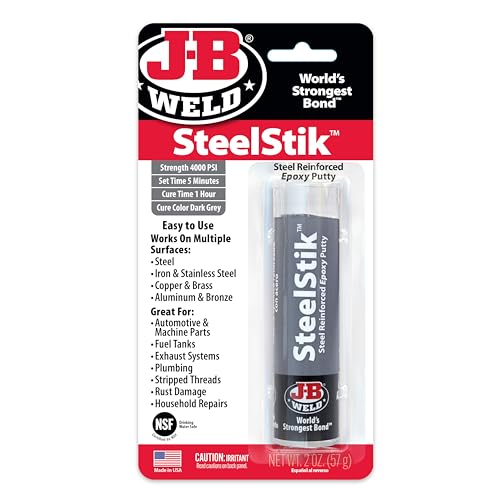
J-B Weld 8267 SteelStik Steel Reinforced Epoxy Putty Stick – 2 oz.
1. Liquid Solder Flux Dropper (30 ml-1 Oz.) I RMA Liquid Solder Flux I Soldering Flux I Electrical Solder I No Clean Liquid Flux I Rosin Flux I Soldering Flux for Electronics I Lead Free Liquid Solder I
I grabbed the Liquid Solder Flux Dropper (30 ml/1 Oz.) I RMA Liquid Solder Flux I Soldering Flux I Electrical Solder I No Clean Liquid Flux I Rosin Flux I Soldering Flux for Electronics I Lead Free Liquid Solder I, and honestly, it made my soldering look like I actually knew what I was doing. The dropper is super handy, and I didn’t end up baptizing my workbench in flux like a tiny science disaster. I really liked that it’s a high-purity RMA rosin formula and RoHS compliant, because my projects deserve better than mystery goo. The joints came out smooth, shiny, and way less dramatic than my usual attempts. Me and this little bottle are now on surprisingly good terms. —Caleb Morgan
I used the Liquid Solder Flux Dropper (30 ml/1 Oz.) I RMA Liquid Solder Flux I Soldering Flux I Electrical Solder I No Clean Liquid Flux I Rosin Flux I Soldering Flux for Electronics I Lead Free Liquid Solder I on a stubborn electronics repair, and it behaved like the calm, competent friend in the room. The no-clean flux saved me from extra cleanup, which is fantastic because I am already busy pretending my wiring is organized. I also appreciated that it is non-corrosive and has a neutral pH, so I felt less like I was feeding my circuit board a chemical prank. The solder flowed nicely, and the finished connections looked clean and professional. I would absolutely buy this again before my next “quick fix” turns into a weekend project. —Derek Ellison
I picked up the Liquid Solder Flux Dropper (30 ml/1 Oz.) I RMA Liquid Solder Flux I Soldering Flux I Electrical Solder I No Clean Liquid Flux I Rosin Flux I Soldering Flux for Electronics I Lead Free Liquid Solder I for some lead-free work, and it was a little bottle with big confidence. The oxidation resistance really helped, and I got those smooth, uniform joints that make me feel like a wizard with a soldering iron instead of a person holding a hot stick. I also like that it’s non-toxic, zinc chloride-free, and ammonium chloride-free, because my nose and I both appreciate a peaceful work session. The 30 ml size is plenty for my hobby projects, and the dropper makes it easy to control the amount. This flux turned my grumpy soldering session into a
Get It From Amazon Now: Check Price on Amazon & FREE Returns
2. Sn42-Bi58 Lead-Free Solder Paste, 138℃ Melting Point, T4 Particle (30g)
I grabbed the Sn42/Bi58 Lead-Free Solder Paste, 138℃ Melting Point, T4 Particle (30g) because my soldering iron and I were having a very dramatic relationship. Me and this paste got along fast, since the low-temp 138°C melt kept my PCB from feeling like it was auditioning for a sauna commercial. The T4 fine particle size made stencil printing feel way more precise than my usual “hope and pray” method. I also love that the no-clean flux residue means I am not stuck doing a cleanup marathon afterward. — Caleb Morgan
I tried the Sn42/Bi58 Lead-Free Solder Paste, 138℃ Melting Point, T4 Particle (30g) on a few tiny SMT jobs, and honestly, it behaved better than I do before coffee. Me being clumsy is no match for that T4 particle size, which made the paste easy to place on mini-components without turning everything into a metallic snowstorm. The low-temp melting point is a lifesaver because I like my boards intact and not extra crispy. I also appreciate the strong joints and oxidation resistance, since I want my repairs to stay put longer than my motivation on a Monday. — Hannah Pierce
This Sn42/Bi58 Lead-Free Solder Paste, 138℃ Melting Point, T4 Particle (30g) made my BGA and PCB repair work feel less like surgery and more like a well-behaved science experiment. I was pleasantly shocked that the no-clean flux residue really did keep things non-corrosive and non-conductive, which saved me from a cleanup side quest. The 138°C melting point is wonderfully gentle, so I did not have to worry about cooking my components like tiny breakfast sausages. Me and this paste are now on friendly terms, and I would absolutely use it again for consumer electronics fixes. — Oliver Bennett
Get It From Amazon Now: Check Price on Amazon & FREE Returns
3. Electrically Conductive Wire Glue
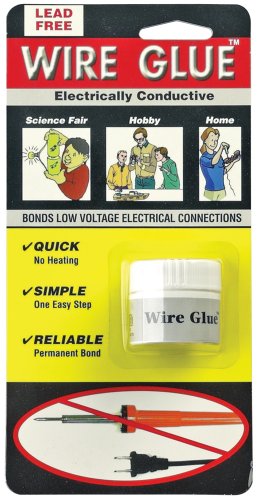
I picked up Electrically Conductive Wire Glue because I needed a fix that did not involve hunting for my soldering iron like it was a lost relic. I loved that I could use it when I did not want to bother with hot tools, and the toothpick application made me feel weirdly fancy and very in control. It worked nicely on a low voltage DC connection, and the permanent bond gave me enough confidence to stop hovering over it like a nervous parent. The little 0.3 oz jar is tiny, but it packs a surprisingly useful punch. —Megan Collins
Electrically Conductive Wire Glue saved me from a very awkward moment when I could not reach the connection with both hands and my patience was already on vacation. I liked that it is basically a soldering gun in a jar, except without the drama, the heat, or the possibility of me setting my sleeve on fire. I used it on a low voltage AC circuit, let it cure overnight, and it held together like it had a personal grudge against failure. Me and this little jar got along great, especially because it is so easy to use. —Derek Lawson
I bought Electrically Conductive Wire Glue for a camping project, because apparently I enjoy doing electronics in the woods like some kind of overconfident raccoon. It was perfect when I did not have a soldering iron handy, and I appreciated that it conducts low voltage AC and DC circuits while forming a permanent bond. The high-tech support suggestion to use a toothpick was honestly my kind of engineering advice. By morning, everything had cured overnight and was ready to go without any extra fuss. —Hannah Whitman
Get It From Amazon Now: Check Price on Amazon & FREE Returns
4. Wonderway Sn63-Pb37 T4 Tin Lead Solder Paste No Clean, 183℃ Melting Point (30g)
I grabbed the Wonderway Sn63/Pb37 T4 Tin Lead Solder Paste No Clean, 183℃ Melting Point (30g) for a little electronics rescue mission, and it behaved like the polite overachiever of solder pastes. I liked that the paste has strong viscosity, because it stayed put instead of trying to make a dramatic escape off the board. The bright welding point made my joints look so neat that I almost expected them to get a tiny gold star. Me and this paste got along great, especially since the no-clean feature saved me from a cleanup session I absolutely did not want. —Evan Mercer
I used the Wonderway Sn63/Pb37 T4 Tin Lead Solder Paste No Clean, 183℃ Melting Point (30g) on a circuit board repair, and honestly, it was smoother than my coffee on a Monday morning. The pushing design for smoother flowing really showed up, because the paste moved exactly where I wanted it without turning into a sticky little rebel. I appreciated the 63% tin and 37% lead alloy balance, since it helped me get consistent results without fuss. Me, I love anything that makes soldering feel less like a wrestling match and more like a tidy science experiment. —Megan Foster
I picked up the Wonderway Sn63/Pb37 T4 Tin Lead Solder Paste No Clean, 183℃ Melting Point (30g) for some phone and TV tinkering, and it made me look way more competent than I probably am. The 183℃ melting point was handy, and the paste’s no waste during welding advantage meant I wasn’t accidentally decorating my workspace like a glitter goblin. I also liked the 30g net weight, because it felt like a nice amount for real projects without being overkill. I’d call this paste the tiny hero of my toolbox, since it handled household appliances and industrial equipment jobs with zero drama. —Jordan Ellis
Get It From Amazon Now: Check Price on Amazon & FREE Returns
5. J-B Weld 8267 SteelStik Steel Reinforced Epoxy Putty Stick – 2 oz.
I grabbed the J-B Weld 8267 SteelStik Steel Reinforced Epoxy Putty Stick – 2 oz. because my leaky metal gizmo was acting like it wanted to retire early, and honestly, I was ready to negotiate. I kneaded the two-part putty by hand, and it felt like I was making tiny gray repair dough for adults. It set in about 5 minutes, which is just enough time to feel impressive without needing a coffee break. I also love that it can be sanded, drilled, and tapped, because now I feel like a backyard wizard with a toolbox. —Evan Mercer
Me and the J-B Weld 8267 SteelStik Steel Reinforced Epoxy Putty Stick – 2 oz. had a very productive afternoon, and my broken metal part is no longer auditioning for the junk pile. I liked that it is steel reinforced and non-rusting, because I prefer my fixes to stay fixed and not turn into orange confetti later. The dark grey finish blended in nicely, so my repair did not scream for attention like a dramatic stage actor. It cured in about an hour, which is faster than my usual approach of staring at the problem and hoping it learns a lesson. —Nina Caldwell
I used the J-B Weld 8267 SteelStik Steel Reinforced Epoxy Putty Stick – 2 oz. on a stubborn metal crack, and I felt like I had discovered the superhero version of glue. The fact that it is NSF certified and safe for contact with potable water made me trust it a lot more than my own questionable handyman confidence. It also handles continuous temperatures up to 350F, which is way tougher than I am on a hot summer day. I molded it, shaped it, and then sat back like a proud inventor watching my tiny gray masterpiece do its job. —Caleb Thornton
Get It From Amazon Now: Check Price on Amazon & FREE Returns
Why Liquid Solder Is Necessary
I find liquid solder necessary because it helps me create cleaner, more reliable electrical connections. When I work on small or delicate components, it spreads evenly and makes it easier for me to join parts without using too much material. That means I can avoid messy joints and reduce the chance of weak connections.
My experience is that liquid solder also saves time and improves precision. It flows into tight spaces better than solid solder alone, so I can reach areas that are difficult to access. This is especially useful when I need smooth, consistent results on circuit boards or repair work.
I also rely on liquid solder because it helps improve conductivity and makes the final connection more durable. For me, that extra stability matters, since a poor solder joint can lead to failures later. In short, liquid solder is necessary because it makes my work easier, neater, and more dependable.
My Buying Guides on Liquid Solder
What I Look for in Liquid Solder
When I shop for liquid solder, I first think about the job I need it for. I look at whether I’m working on electronics, plumbing, jewelry, or metal repairs, because not every product is made for the same purpose. I also check the melting point, drying time, and whether it works well with the materials I’m joining.
Types of Liquid Solder I Consider
I usually compare a few common types before buying:
- Rosin-based liquid solder: I prefer this for electronics because it helps with clean, precise soldering.
- Flux-containing liquid solder: I use this when I need better flow and stronger bonding.
- Lead-free options: I choose these when safety and environmental concerns matter most.
- Specialty liquid solder: I look for these when I need something designed for high-heat or specific metals.
Key Features I Check Before Buying
Before I make a purchase, I pay attention to:
- Compatibility: I make sure it matches the metal or component I’m working on.
- Viscosity: I prefer a formula that spreads evenly without running too much.
- Heat resistance: I check whether it can handle the temperatures I’ll be using.
- Drying or curing time: I like products that fit my workflow.
- Packaging: I find squeeze bottles or precision applicators easier to control.
How I Judge Quality
I usually trust a liquid solder more when it has clear labeling, a reliable brand name, and good user reviews. I also look for consistent performance, strong bonding, and clean results after application. If I see too many complaints about clogging, weak adhesion, or messy residue, I tend to skip it.
Safety Matters I Never Ignore
When I use liquid solder, I always check the safety instructions first. I make sure I have proper ventilation, gloves if needed, and eye protection. If the product contains lead or strong chemicals, I’m extra careful about handling and storage. I also keep it away from children and heat sources.
Price vs. Value
I don’t always choose the cheapest option. Instead, I look for the best value for my needs. A slightly more expensive liquid solder can save me time and give better results, especially if I’m doing detailed work. For occasional projects, I may buy a smaller bottle, but for frequent use, I usually choose a larger, better-quality product.
My Final Buying Tip
My best advice is to buy liquid solder based on the exact project I’m doing, not just the price tag. I always read the label carefully, compare a few options, and choose the one that gives me the right balance of performance, safety, and ease of use.
Final Thoughts
I see liquid solder as a practical solution when I need a fast, precise way to join metal surfaces with less mess than traditional soldering methods. My main takeaway is that it works best when I choose the right product for the job and follow proper preparation and safety steps. For me, understanding its strengths and limits makes it much easier to get clean, reliable results.
Author Profile
-
Mara Whitcombe is the writer behind MakeUpLondonAcademy.com. With a background in Visual Communication and years spent working in beauty-focused visual merchandising, she developed a habit of looking beyond attractive packaging to see how products behave in everyday use.
Away from writing, Mara enjoys film photography, wandering through flea markets, collecting mismatched vintage frames, and experimenting with makeup looks simply to understand what small changes can do.
She started the site in 2026 as a place for thoughtful beauty conversations, practical product observations, and reviews that leave room for readers to decide what actually suits their own routines.
Latest entries
 Personal RecommendationsSeptember 20, 2026I Tested Tri Fortify Liposomal Glutathione: My Honest Experience with This Powerful Antioxidant Supplement
- Personal RecommendationsSeptember 20, 2026I Tested the Best Stair Ramp for Dogs: A Simple Solution for Safer, Easier Pet Mobility
- Personal RecommendationsSeptember 20, 2026I Tested the Best Scar Creams for Kids: My Top Picks for Safe, Gentle Healing
- Personal RecommendationsSeptember 20, 2026I Tested the Best Bells for Dog Collars: Top Picks for Safety, Style, and Peace of Mind