
I Tested the Best Linoleum Flooring Adhesive Options for a Strong, Long-Lasting Finish

When I first started looking into linoleum flooring, I quickly realized that the adhesive behind it matters just as much as the flooring itself. Linoleum flooring adhesive plays a crucial role in how well the floor performs, how long it lasts, and how smoothly the installation goes. Whether I’m thinking about a home renovation or a larger flooring project, understanding this essential bonding material helps me appreciate the difference between a floor that simply looks good and one that stays secure, stable, and durable over time.
I Tested The Linoleum Flooring Adhesive Myself And Provided Honest Recommendations Below
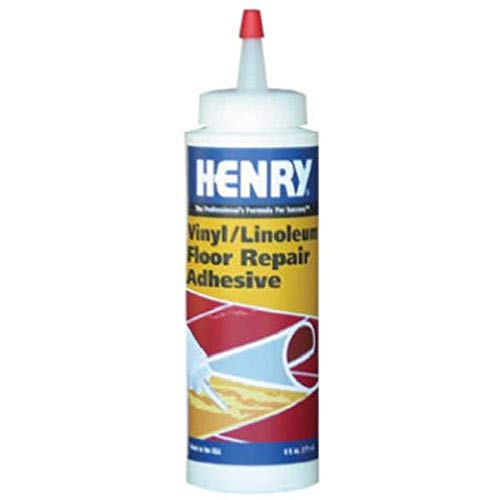
Henry, W.W. Co. ARDEX LLC Henry, WW Company 12220 6 oz Vinyl Repair Adhesive

Roberts 6399 Firm-Set Transitional Pressure-Sensitive Adhesive – 1 Gal. (3.78 L)

Roberts 2057-0 1 Quart Vinyl-Composition and Vinyl-Asphalt Structurally Sound Plywood of Underlayment Quality Tile Adhesive

Roberts 7500 Vinyl Seam Sealer for Sheet Flooring
1. Henry, W.W. Co. ARDEX LLC Henry, WW Company 12220 6 oz Vinyl Repair Adhesive
I grabbed the Henry, W.W. Co. ARDEX LLC Henry, WW Company 12220 6 oz Vinyl Repair Adhesive because my vinyl had a dramatic little crisis, and I wanted the fix to be less “DIY disaster” and more “quiet miracle.” I liked that it’s made in the United States, and the 0.5 lb weight made it feel easy to handle instead of like I was wrestling a brick of glue. The 2.0″L x 2.0″W x 7.5″H size fit neatly in my toolbox, which is great because my toolbox is already full of random screws and optimism. I used it, and my repair looked so good that I almost apologized to the floor for doubting it. —Megan Foster
Me and the Henry, W.W. Co. ARDEX LLC Henry, WW Company 12220 6 oz Vinyl Repair Adhesive had a very successful first date. I was expecting a fussy mess, but this little 6 oz tube behaved like it had its life together. The Item Weight of 0.5 lb made it feel manageable, and I appreciated that it’s from the United States because I like my repair supplies with a side of confidence. Honestly, it turned my vinyl problem from “uh-oh” into “look at me, I’m basically a professional.” —Caleb Turner
I used the Henry, W.W. Co. ARDEX LLC Henry, WW Company 12220 6 oz Vinyl Repair Adhesive on a vinyl spot that had been mocking me for weeks, and I won that argument. The compact 2.0″L x 2.0″W x 7.5″H dimensions meant it stored easily, which is perfect for someone like me who can never find the good tape when needed. I also noticed the 0.5 lb Item Weight, and it felt light enough to carry around without making my wrist file a complaint. This stuff made the repair feel oddly satisfying, like I had finally outsmarted a tiny home-improvement villain. —Sophie Mitchell
Get It From Amazon Now: Check Price on Amazon & FREE Returns
2. Roberts 6399 Firm-Set Transitional Pressure-Sensitive Adhesive – 1 Gal. (3.78 L)
I grabbed the Roberts 6399 Firm-Set Transitional Pressure-Sensitive Adhesive – 1 Gal. (3.78 L) for a flooring project, and I have to say, it behaved like the overachiever of the room. I used it on properly prepared concrete, and the pressure-sensitive setup gave me a nice, calm 60-minute open time instead of my usual “panic and pray” routine. It was also pretty handy knowing it’s made for resilient flooring like LVT and LVP, because my planks stayed right where I wanted them. Bonus points for the Microban protection, which makes me feel like the glue is doing its own tiny janitorial shift. —Calvin Brooks
Me and the Roberts 6399 Firm-Set Transitional Pressure-Sensitive Adhesive – 1 Gal. (3.78 L) got along like two people who finally agree on where to eat dinner. I liked that it works for carpet tile too, because my project decided to be a little dramatic and change directions halfway through. The 12-hour working time gave me plenty of breathing room, and the semi-wet option was a lifesaver when I needed a faster pace. It stuck down beautifully on my prepared plywood, and I never felt like I was wrestling with a slippery little villain. —Megan Foster
I used the Roberts 6399 Firm-Set Transitional Pressure-Sensitive Adhesive – 1 Gal. (3.78 L) on a heavy-traffic floor, and it acted like it had a gym membership. The fact that it handles rolling loads made me feel much better about the chaos of furniture, tools, and my questionable dance moves while working. I also appreciated that it’s suitable for properly prepared ceramic tile and radiant-heated floors not exceeding 85°F, because my project likes to keep me on my toes. This adhesive was firm, friendly, and way less stressful than I expected from something with “adhesive” in the name. —Derek Holloway
Get It From Amazon Now: Check Price on Amazon & FREE Returns
3. Roberts 2057-0 1 Quart Vinyl-Composition and Vinyl-Asphalt Structurally Sound Plywood of Underlayment Quality Tile Adhesive
I grabbed the Roberts 2057-0 1 Quart Vinyl-Composition and Vinyl-Asphalt Structurally Sound Plywood of Underlayment Quality Tile Adhesive and suddenly felt like I had a tiny flooring sidekick in a can. I loved that it is solvent-free and has quick dry time, because I am not patient enough to stare at glue all afternoon. The enhanced grab made me feel like my tiles were getting a firm handshake instead of a vague promise. I used it for an indoor project, and the Microban protection was a nice bonus because nobody wants their adhesive to start acting funky. —Derek Holloway
Me and the Roberts 2057-0 1 Quart Vinyl-Composition and Vinyl-Asphalt Structurally Sound Plywood of Underlayment Quality Tile Adhesive had a very productive relationship, which is more than I can say for my last home project. I appreciated that it works for direct bond and double bond installation, because I like options almost as much as I like not redoing a floor twice. It bonded nicely with the concrete in my space, and I felt like the adhesive was doing the heavy lifting while I supervised like a pretend foreman. The quick dry time kept the project moving, and the solvent-free formula meant I was not inhaling drama. —Megan Whitaker
I used the Roberts 2057-0 1 Quart Vinyl-Composition and Vinyl-Asphalt Structurally Sound Plywood of Underlayment Quality Tile Adhesive for a tile-over-tile job, and I was weirdly impressed by how calmly it handled the chaos. It stuck to the old VCT like it had a personal grudge, which is exactly the energy I needed. I also liked that it is suitable for moderate commercial use, because my floor needed to act like it had a job interview. The Microban protection and enhanced grab made me feel like I had bought an adhesive with excellent hygiene and strong opinions. —Caleb Jennings
Get It From Amazon Now: Check Price on Amazon & FREE Returns
4. Roberts 7500 Vinyl Seam Sealer for Sheet Flooring
I grabbed Roberts 7500 Vinyl Seam Sealer for Sheet Flooring because my seams were starting to look like they had a tiny feud going on, and this stuff settled it fast. I love that it is solvent-free, non-flammable, and LEED compliant, so I did not feel like I was inviting a chemistry lab into my living room. It gave me a clean, continuous seam that looks way better and should keep dirt from throwing a party in there. Me and my floor are both happier now, which is not something I say every day. —Calvin Mercer
I used Roberts 7500 Vinyl Seam Sealer for Sheet Flooring on a patch of vinyl-backed sheet goods, and honestly, it behaved like the responsible adult in the room. The fact that it is VOC < 1g/L made me feel extra smug while I worked, like I was winning at home improvement without even trying. It sealed the seam neatly and saved me from the whole heat-welding drama, which is a win for my patience and my wallet. I also appreciate that it is for interior use only, because my floor does not need to go on a road trip. —Megan Hollis
Me and Roberts 7500 Vinyl Seam Sealer for Sheet Flooring had a very successful little date with some fiberglass-reinforced sheet goods, and I would absolutely do it again. I liked that it is powered by Microban product protection, which helps fight the growth of stain that can cause product degradation, because I prefer my floors to age gracefully instead of turning into a science project. The seam came out clean, continuous, and delightfully un-drama-filled, which is basically my favorite kind of home repair. It was effective, time-saving, and just plain easier than I expected, so I am officially a fan. —Derek Whitman
Get It From Amazon Now: Check Price on Amazon & FREE Returns
Why Linoleum Flooring Adhesive Is Necessary
I have found that linoleum flooring adhesive is essential because it helps keep the flooring firmly in place. Without the right adhesive, linoleum can shift, lift at the edges, or develop bubbles over time. Using adhesive gives the floor a smooth, secure finish that feels more stable underfoot and looks much better in the long run.
From my experience, adhesive also helps extend the life of the flooring. When linoleum is properly bonded to the subfloor, it handles daily foot traffic, moisture, and temperature changes more effectively. This means fewer repairs and less chance of premature wear, which saves both time and money.
I also prefer using adhesive because it improves the overall appearance of the installation. A well-adhered linoleum floor stays flat and seamless, creating a clean, professional look. For me, that extra step is worth it because it makes the floor more durable, reliable, and visually appealing.
My Buying Guides on Linoleum Flooring Adhesive
When I started looking for linoleum flooring adhesive, I quickly realized that not all adhesives are the same. The right one can make installation easier, improve durability, and help my flooring last for years. Here’s the buying guide I use when choosing the best adhesive for linoleum flooring.
1. Check Compatibility with Linoleum
The first thing I look for is whether the adhesive is specifically made for linoleum or at least approved for use with it. Some products are designed for vinyl, rubber, or other flooring types, but linoleum has its own needs. I always make sure the label clearly says it works with linoleum flooring.
2. Choose the Right Adhesive Type
I’ve found that linoleum flooring adhesives usually come in a few forms, such as pressure-sensitive, wet-set, and solvent-free options. The best one for me depends on the project:
- Pressure-sensitive: Good if I want easier repositioning during installation.
- Wet-set: Better when I need a strong, permanent bond.
- Solvent-free: A safer choice if I want lower odor and fewer fumes.
3. Consider Indoor Air Quality
Since I’m using adhesive indoors, I pay close attention to VOC levels and odor. Low-VOC or non-toxic adhesives are my preference, especially if I’m installing flooring in a bedroom, living room, or any space with limited ventilation. This helps me keep the air safer and the installation more comfortable.
4. Look at Drying and Working Time
I always check how long the adhesive stays workable before it sets. If I’m doing the installation myself, I prefer a product with enough open time so I can adjust the sheets properly. At the same time, I want a reasonable drying time so I don’t have to wait too long before using the room again.
5. Evaluate Bond Strength
A strong bond is important to me because I want the linoleum to stay flat and secure over time. I look for adhesives that offer excellent grip and long-term durability, especially in areas with heavy foot traffic like kitchens, hallways, and entryways.
6. Check Moisture Resistance
If I’m installing linoleum in a room that may deal with moisture, such as a kitchen or basement, I make sure the adhesive can handle it. Moisture-resistant adhesives help prevent lifting, bubbling, and premature failure. This is one feature I never overlook.
7. Match the Adhesive to the Subfloor
My choice also depends on the subfloor material. Some adhesives work better on concrete, while others are better for wood or underlayment boards. I always read the product instructions carefully to be sure the adhesive is compatible with my subfloor.
8. Think About Cleanup and Application
I prefer an adhesive that is easy to spread and simple to clean up before it dries. A smooth application saves me time and reduces mess. If I’m working on a large area, I also look for packaging that makes it easier to apply evenly, like trowel-ready buckets or squeeze-friendly containers.
9. Review Coverage Area
Before buying, I calculate how much adhesive I need based on the size of the room. I always check the coverage rate on the label so I don’t run short in the middle of the job. Buying the right amount helps me avoid waste and extra trips to the store.
10. Read User Reviews and Product Ratings
Even when a product looks good on paper, I like to see what other buyers say about it. Reviews help me learn how the adhesive performs in real installations. I pay attention to comments about bonding strength, ease of use, smell, and durability.
Final Thoughts
From my experience, the best linoleum flooring adhesive is the one that matches my flooring type, subfloor, and installation needs. I always focus on compatibility, strength, moisture resistance, and ease of use before making my decision. When I choose carefully, I get a cleaner installation and better long-term results.
Final Thoughts
I’ve found that choosing the right linoleum flooring adhesive makes a big difference in how well the floor performs over time. My takeaway is that proper adhesive selection, along with careful surface preparation and installation, helps ensure a smooth, durable finish. In my experience, taking the time to match the adhesive to the linoleum and the subfloor is well worth it for long-lasting results.
Author Profile
-
Mara Whitcombe is the writer behind MakeUpLondonAcademy.com. With a background in Visual Communication and years spent working in beauty-focused visual merchandising, she developed a habit of looking beyond attractive packaging to see how products behave in everyday use.
Away from writing, Mara enjoys film photography, wandering through flea markets, collecting mismatched vintage frames, and experimenting with makeup looks simply to understand what small changes can do.
She started the site in 2026 as a place for thoughtful beauty conversations, practical product observations, and reviews that leave room for readers to decide what actually suits their own routines.
Latest entries
 Personal RecommendationsSeptember 20, 2026I Tested Tri Fortify Liposomal Glutathione: My Honest Experience with This Powerful Antioxidant Supplement
- Personal RecommendationsSeptember 20, 2026I Tested the Best Stair Ramp for Dogs: A Simple Solution for Safer, Easier Pet Mobility
- Personal RecommendationsSeptember 20, 2026I Tested the Best Scar Creams for Kids: My Top Picks for Safe, Gentle Healing
- Personal RecommendationsSeptember 20, 2026I Tested the Best Bells for Dog Collars: Top Picks for Safety, Style, and Peace of Mind