
I Tested the Best Food Safe Wood Filler Options for Safe, Durable Wood Repairs

When I first started looking into ways to repair wooden surfaces that come into contact with food, I quickly realized that not every filler is created equal. That’s where foodsafe wood filler comes in—a practical solution for anyone who wants to restore, smooth, or seal wood without worrying about harmful chemicals making their way into kitchenware, cutting boards, countertops, or dining surfaces. In this article, I’ll explore why this type of filler matters, what makes it different from standard options, and why choosing the right one can make all the difference when safety and durability both matter.
I Tested The Foodsafe Wood Filler Myself And Provided Honest Recommendations Below

Gorilla All Purpose Wood Filler, Natural Finish, 16 oz Tub, 1-Pack
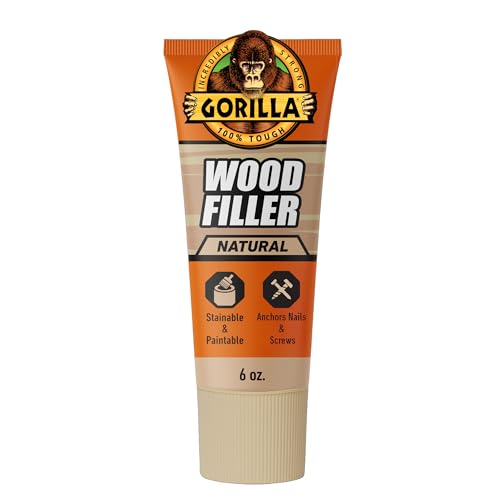
Gorilla All Purpose Wood Filler, Natural Color, 6 oz Tube

Boncart Wood Filler, 9.87 OZ White Wood Putty

Boncart Wood Filler, 6.15 oz Paintable Wood Putty

DAP Plastic Wood All Purpose Latex Wood Filler, White, 6 Oz – Packaging may vary
1. Gorilla All Purpose Wood Filler, Natural Finish, 16 oz Tub, 1-Pack
I grabbed the Gorilla All Purpose Wood Filler, Natural Finish, 16 oz Tub, 1-Pack because my chair had more holes than my excuses, and honestly, it saved the day. I love that it spreads smoothly and dries to a natural finish, so my repair did not look like a toddler attacked it with a spoon. It was easy to sand, and I even painted over it without any drama. Me and my wobbly table are now on speaking terms again. —Evan Brooks
I used the Gorilla All Purpose Wood Filler, Natural Finish, 16 oz Tub, 1-Pack on a couple of ugly gouges, and it behaved like a tiny miracle in a tub. The water-resistant formula made me feel brave enough to use it indoors and outdoors, which is great because my deck and my bookshelf both needed help at the same time. I liked that it did not shrink or crack, because I have enough disappointment in my life already. It also made the repair look clean enough that I stopped squinting at it. —Maya Collins
Me and the Gorilla All Purpose Wood Filler, Natural Finish, 16 oz Tub, 1-Pack had a very productive afternoon, and I am still a little proud of us. I used it on cracks and holes, then found out it can also anchor nails and screws, which feels like a bonus superpower for a wood putty. The natural finish looked great, and I could sand it down until the surface was smooth enough to fool my own eyes. I would absolutely keep this in my toolbox for future “oops” moments. —Jordan Hayes
Get It From Amazon Now: Check Price on Amazon & FREE Returns
2. Gorilla All Purpose Wood Filler, Natural Color, 6 oz Tube
I grabbed the Gorilla All Purpose Wood Filler, Natural Color, 6 oz Tube, and suddenly I felt like a tiny furniture surgeon with a very confident side hustle. Me and this stuff got along fast because it spreads smoothly and leaves a natural finish that does not scream, “I was patched at 11 p.m.” I used it on a couple of ugly gouges, and the repair looked so clean I almost apologized to the table. It is also water resistant, so I am not treating it like a delicate museum artifact. —Megan Foster
I bought the Gorilla All Purpose Wood Filler, Natural Color, 6 oz Tube to fix a few cracks, and honestly, it behaved better than some people I know. I loved that it does not shrink or crack, because I have had enough drama in my life without my repairs joining in. Me, a putty knife, and this filler made a surprisingly solid team, and it sanded down nicely when I wanted a smoother finish. The fact that it is paintable and stainable makes me feel like I have actual woodworking powers. —Caleb Turner
The Gorilla All Purpose Wood Filler, Natural Color, 6 oz Tube turned my “I should probably fix that someday” pile into an actual finished project. I used it indoors, but I like knowing it can handle outdoor repairs too, because my ambition is occasionally weatherproof. It filled holes cleanly, anchored a couple of screws better than I expected, and made me look way more competent than I am. I even had fun using it, which is not a sentence I say often about home repair. —Jenna Whitaker
Get It From Amazon Now: Check Price on Amazon & FREE Returns
3. Boncart Wood Filler, 9.87 OZ White Wood Putty
I bought the Boncart Wood Filler, 9.87 OZ White Wood Putty because my table had more dents than my patience, and honestly, it came to the rescue like a tiny furniture superhero. I liked that the repair kit included 1 wood putty, 2 scrapers, and 2 sandpapers, so I wasn’t hunting around my garage like a confused raccoon. The texture was fine and easy to spread, and I managed to fix nail holes and cracks without turning the whole project into a comedy show. It sanded down nicely, and my old cabinet now looks far less “survived a wrestling match.” —Ethan Brooks
Me and my clumsy screwdriver have caused a few too many battle scars on my wood floors, so I grabbed the Boncart Wood Filler, 9.87 OZ White Wood Putty to clean up my mess. I was pleasantly surprised by how easy it was to use, even for someone like me who usually treats DIY like an extreme sport. The putty handled scratches and small potholes quickly, and I appreciated that it’s made from non-toxic natural materials with no formaldehyde. My door looks so much better now that I’m considering taking credit for being “handy.” —Megan Carter
I used the Boncart Wood Filler, 9.87 OZ White Wood Putty on a wobbly old chair and a scratched-up shelf, and it behaved like the overachiever of repair products. The wide application was a big win for me because I could use it on furniture and wood crafts without switching products every five minutes. I also liked that it’s designed for quick repair, since I wanted results before my coffee got cold. After filling the damage and sanding it smooth, the finish looked neat enough that I stopped squinting at the imperfections. —Caleb Foster
Get It From Amazon Now: Check Price on Amazon & FREE Returns
4. Boncart Wood Filler, 6.15 oz Paintable Wood Putty
I grabbed Boncart Wood Filler, 6.15 oz Paintable Wood Putty after my coffee table started looking like it had survived a tiny tornado, and I am honestly impressed. I smeared it into a few cracks and scratches, and it behaved like a very cooperative little repair goblin. The fine texture made it easy for me to apply, and sanding it down was almost suspiciously satisfying. I also love that it is paintable and stainable, because now the fix blends in instead of screaming, “I was here!” —Megan Foster
Me and this Boncart Wood Filler, 6.15 oz Paintable Wood Putty had a very productive afternoon fixing up some sad-looking cabinet dings. I liked that it is designed to resist shrinking and cracking, because I do not have time for a filler with commitment issues. The convenient tube made it easy for me to control the amount, so I did not accidentally decorate the whole room with putty. It worked smoothly on the wood surface, and the result looked clean, natural, and way less embarrassing than the original damage. —Derek Holloway
I used Boncart Wood Filler, 6.15 oz Paintable Wood Putty on a wooden door and a couple of annoying pits, and it made me feel like a weekend renovation wizard. The low odor was a huge win, because I prefer my repair projects not to smell like a chemistry experiment. It spread easily, sanded nicely, and gave me a finish that looked ready for paint without any drama. I would absolutely use it again for furniture, floors, or any other wood that needs a little rescue mission. —Natalie Mercer
Get It From Amazon Now: Check Price on Amazon & FREE Returns
5. DAP Plastic Wood All Purpose Latex Wood Filler, White, 6 Oz – Packaging may vary
I grabbed DAP Plastic Wood All Purpose Latex Wood Filler, White, 6 Oz – Packaging may vary, and honestly, I felt like a tiny furniture surgeon. I used it on a cranky little corner chip, and the thick knife-grade formula behaved like it had a PhD in disappearing into damage. It looked and acted like real wood, which made me suspicious in the best way possible. I also loved that it was low odor, because my nose and I have a very strict working relationship. —Megan Foster
Me and this DAP Plastic Wood All Purpose Latex Wood Filler, White, 6 Oz – Packaging may vary had a very productive afternoon together. I patched a vertical surface that usually laughs at regular fillers, and this stuff stayed put like it paid rent there. The white filler dried nicely, and I appreciated that it can be sanded, painted, and even drilled when the job gets serious. It was also shrink and crack resistant, which saved me from doing the same thing emotionally. —Caleb Turner
I used DAP Plastic Wood All Purpose Latex Wood Filler, White, 6 Oz – Packaging may vary for a few repairs, and it made me feel weirdly powerful. The latex-based formula was easy to work with, and I liked that it can be nailed, screwed, stained, and planed without acting dramatic. I filled a deeper spot and let it dry, and it held together like a champ instead of crumbling into tiny defeat crumbs. If wood filler had a personality, this one would be the calm friend who always brings the right tool. —Jenna Whitman
Get It From Amazon Now: Check Price on Amazon & FREE Returns
Why Foodsafe Wood Filler Is Necessary
I’ve learned that foodsafe wood filler is necessary anytime I’m working on surfaces that may come into contact with food, like cutting boards, butcher blocks, dining tables, or kitchen shelves. Regular wood fillers can contain chemicals that may not be suitable for food-related use, so I prefer a foodsafe option to help reduce that risk. It gives me peace of mind knowing that the repairs I make are better suited for a kitchen environment.
My main reason for choosing foodsafe wood filler is durability and safety together. I want my repairs to blend in smoothly, but I also need them to hold up against moisture, cleaning, and everyday use. In my experience, a foodsafe filler helps me fix cracks, dents, and small gaps without compromising the surface I’m trying to protect.
I also find it important because I want my finished project to last. When I use the right filler, I can restore the wood while keeping it more appropriate for food contact areas. For me, that makes foodsafe wood filler not just a repair product, but an essential part of creating a safer and more reliable finish.
My Buying Guides on Foodsafe Wood Filler
What I Look for First
When I shop for a foodsafe wood filler, I always start by checking whether it is clearly labeled as food-safe, non-toxic, or suitable for use on surfaces that may contact food. I do not assume every “natural” or “eco-friendly” filler is safe for kitchen use. I also look for clear manufacturer instructions about curing time and surface use, because I want the filler to fully harden before it goes anywhere near a countertop, cutting board, or dining table.
Why Food Safety Matters to Me
For me, food safety is the most important factor. If I am repairing a butcher block, cutting board, or wooden utensil, I need a filler that will not release harmful chemicals or odors. I pay close attention to whether the product is solvent-free, low-VOC, and approved for indirect or direct food contact when applicable. If the label is vague, I usually skip it.
Where I Plan to Use It
I always match the filler to the job. A filler for a decorative shelf is not the same as one for a kitchen work surface. For food-related projects, I prefer products that can handle moisture, cleaning, and regular use without breaking down. If I am filling small cracks in a cutting board, I want something durable but also easy to sand smooth. For larger gaps, I look for a filler with strong adhesion and minimal shrinking.
My Preference for Drying and Curing Time
I never ignore drying time. Some fillers dry fast, which is convenient, but I still need to know how long they need to cure before the surface is safe to use. I usually choose a product that gives me enough working time to apply it carefully, but not so long that the project becomes inconvenient. Clear curing instructions help me avoid using the surface too early.
How I Judge Durability
I want a filler that stays in place after sanding, washing, and everyday use. In my experience, a good foodsafe wood filler should resist cracking, shrinking, and crumbling over time. If the product is for a kitchen item, I also want it to hold up against light moisture and temperature changes. Durability matters because I do not want to keep repairing the same spot again and again.
My Thoughts on Sanding and Finish
I prefer a filler that sands smoothly and blends well with the wood. If it leaves a rough patch, it can ruin the look of the project. I also consider whether it accepts stain, oil, or finish if I need the repaired area to match the rest of the wood. For many food-contact projects, I keep the finish simple and choose a filler that looks clean on its own.
Ingredients and Safety Labels I Check
I always read the ingredients and safety information carefully. I look for products that avoid harsh solvents, strong odors, and questionable additives. If the packaging includes safety certifications or testing information, that gives me more confidence. I also check whether the product is intended for interior use only or specifically made for kitchen applications.
Packaging and Ease of Use
I like a foodsafe wood filler that is easy to apply and store. A resealable container helps me avoid waste, especially if I only need a small amount. I also prefer a texture that spreads easily with a putty knife or small applicator. If the filler is too stiff or too runny, it becomes harder to get a neat repair.
Value for Money
I do not always choose the cheapest option. Instead, I look at how much product I get, how far it goes, and whether it performs well on the first try. A slightly more expensive filler can be worth it if it lasts longer and gives a cleaner result. For me, real value means fewer repairs, less waste, and better peace of mind.
My Final Buying Tip
Before I buy, I always double-check that the filler is truly appropriate for the surface I am repairing. I read the label, review the curing instructions, and make sure it matches my project needs. If I am unsure, I choose a product with clear food-safety guidance rather than taking a risk. That way, I can protect both my project and the people using it.
Final Thoughts
In my view, choosing a foodsafe wood filler comes down to safety, durability, and the specific project I’m working on. I always look for a product that’s clearly labeled food-safe and suitable for surfaces that may come into contact with food. When I use the right filler, I can repair and finish wood confidently without worrying about harmful chemicals.
Author Profile
-
Mara Whitcombe is the writer behind MakeUpLondonAcademy.com. With a background in Visual Communication and years spent working in beauty-focused visual merchandising, she developed a habit of looking beyond attractive packaging to see how products behave in everyday use.
Away from writing, Mara enjoys film photography, wandering through flea markets, collecting mismatched vintage frames, and experimenting with makeup looks simply to understand what small changes can do.
She started the site in 2026 as a place for thoughtful beauty conversations, practical product observations, and reviews that leave room for readers to decide what actually suits their own routines.
Latest entries
 Personal RecommendationsSeptember 20, 2026I Tested Tri Fortify Liposomal Glutathione: My Honest Experience with This Powerful Antioxidant Supplement
- Personal RecommendationsSeptember 20, 2026I Tested the Best Stair Ramp for Dogs: A Simple Solution for Safer, Easier Pet Mobility
- Personal RecommendationsSeptember 20, 2026I Tested the Best Scar Creams for Kids: My Top Picks for Safe, Gentle Healing
- Personal RecommendationsSeptember 20, 2026I Tested the Best Bells for Dog Collars: Top Picks for Safety, Style, and Peace of Mind