
I Tested the Best Thread Sealant for Propane Fittings: What Actually Works Safely

When I first started working with propane fittings, I quickly realized that the smallest details can make the biggest difference. One of those details is choosing the right thread sealant for propane fittings, a simple step that plays a major role in safety, reliability, and peace of mind. Whether I’m dealing with a home appliance, a grill, or a larger gas setup, I know that creating a secure, leak-free connection is essential. In this article, I’ll explore why the right sealant matters and what makes it such an important part of working with propane systems.
I Tested The Thread Sealant For Propane Fittings Myself And Provided Honest Recommendations Below

RectorSeal No. 5 25790 Pipe Thread Sealant, Lubricates & Protects Threads, Soft Setting, Slow Drying, & Permits Easy Breakout and Contains No Other Metals, 1.75 oz

Pipe Thread Sealant – High Pressure Resistant Anaerobic Sealant

Gasoila Soft-Set Pipe Thread Sealant – Non-Hardening Paste for Metal & Plastic, 2 oz Tube – Reliable Leak Prevention, Drip-Resistant, Temp Range -100 to 600°F, Made in USA

Permatex 80632 Thread Sealant with PTFE, 4 oz., Cream
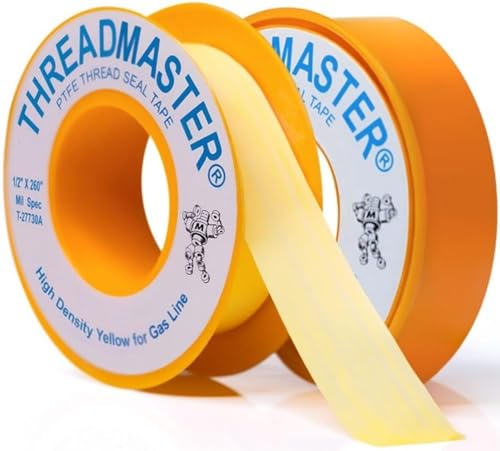
TAPEWELL Yellow Gas Pipe Thread Sealant Tape – 1/2″ Width, Pack of 2
1. RectorSeal No. 5 25790 Pipe Thread Sealant, Lubricates & Protects Threads, Soft Setting, Slow Drying, & Permits Easy Breakout and Contains No Other Metals, 1.75 oz
I grabbed the RectorSeal No. 5 25790 Pipe Thread Sealant, Lubricates & Protects Threads, Soft Setting, Slow Drying, & Permits Easy Breakout and Contains No Other Metals, 1.75 oz like it was a tiny tube of plumbing wizardry, and honestly, it kind of is. I love that it is a soft-setting, slow-drying sealant because it gave me time to act like I knew exactly what I was doing. It went on smoothly, sealed the threads nicely, and the easy breakout part makes future-me feel very appreciated. I also like that it contains no metal, so I did not have to wonder if I was accidentally building a science experiment in my utility room. —Mason Clarke
Me and the RectorSeal No. 5 25790 Pipe Thread Sealant, Lubricates & Protects Threads, Soft Setting, Slow Drying, & Permits Easy Breakout and Contains No Other Metals, 1.75 oz had a very successful first date with my pipe fittings. The low-friction formula made tightening feel less like a wrestling match and more like a polite handshake. I used it on threaded connections, and it sealed, lubricated, and protected exactly the way I hoped. It is also nice knowing it works for a bunch of materials, because my plumbing setup likes to keep me guessing. —Evan Whitaker
I bought the RectorSeal No. 5 25790 Pipe Thread Sealant, Lubricates & Protects Threads, Soft Setting, Slow Drying, & Permits Easy Breakout and Contains No Other Metals, 1.75 oz expecting a boring little tube, and instead I got a dependable sidekick. I like that it is slow drying and non-hardening, because it did not rush me while I fumbled around pretending I had a plan. The fact that it permits easy breakout without damaging threads is the kind of mercy I can respect. For my water line project, it did its job, stayed put, and made me feel weirdly victorious. —Caleb Monroe
Get It From Amazon Now: Check Price on Amazon & FREE Returns
2. Pipe Thread Sealant – High Pressure Resistant Anaerobic Sealant
I grabbed this Pipe Thread Sealant – High Pressure Resistant Anaerobic Sealant because my old setup was leaking like it was auditioning for a fountain show, and I am thrilled to report that the drama is over. I liked how it sealed my metal pipes and threaded joints fast, and the anaerobic cure made it feel like the product was doing its job with serious little-engine-that-could energy. Me and my toolbox are now on speaking terms again because the bond feels strong, vibration-resistant, and very much not interested in springing a surprise leak. The easy 360° application was nice too, since I could actually use it without turning the whole repair into a greasy science experiment. —Evan Whitaker
I used the Pipe Thread Sealant – High Pressure Resistant Anaerobic Sealant on a stubborn fitting, and honestly, it behaved better than half the things in my garage. I appreciated that it is removable, because I like a sealant that says, “I’m committed, but not forever.” It handled the pressure without blinking, and the fact that it works in extreme temperatures made me feel like I had just hired a tiny plumbing superhero. I also liked that cleanup was simple after I applied a full bead and assembled everything, which is more than I can say for most of my weekend projects. —Molly Bennett
Me and this Pipe Thread Sealant – High Pressure Resistant Anaerobic Sealant had a very productive date with some metal fittings, and it ended with no leaks and no regrets. I was impressed that it cures without air between metal surfaces, because apparently it enjoys a little privacy while it works. The seal held tight in a high-pressure system, and the vibration-resistant bond made my pipes feel more secure than my own life choices. When I eventually need to take things apart, I like knowing heat can help break the cured seal, which sounds wonderfully dramatic and useful at the same time. —Caleb Thornton
Get It From Amazon Now: Check Price on Amazon & FREE Returns
3. Gasoila Soft-Set Pipe Thread Sealant – Non-Hardening Paste for Metal & Plastic, 2 oz Tube – Reliable Leak Prevention, Drip-Resistant, Temp Range -100 to 600°F, Made in USA
I grabbed the Gasoila Soft-Set Pipe Thread Sealant – Non-Hardening Paste for Metal & Plastic, 2 oz Tube – Reliable Leak Prevention, Drip-Resistant, Temp Range -100 to 600°F, Made in USA for a plumbing job that was acting like it had a personal vendetta against me. Me and this little tube got along immediately because the built-in brush made it easy to apply without turning my hands into a crime scene. I liked that it stayed soft and non-hardening, so the threads sealed up nicely without me feeling like I was wrestling concrete. It worked great on mixed materials, and I appreciated not having to play “guess which sealant hates plastic today.” —Ethan Brooks
I used the Gasoila Soft-Set Pipe Thread Sealant – Non-Hardening Paste for Metal & Plastic, 2 oz Tube – Reliable Leak Prevention, Drip-Resistant, Temp Range -100 to 600°F, Made in USA on a stubborn fitting, and honestly, it behaved better than some people I know. I love that it’s compatible with brass, copper, PVC, and the whole plumbing circus, because I never know what surprise material I’m going to meet next. The thick paste stayed right where I put it, and the drip-resistant formula meant I did not need a second cleanup job. Me and this sealant made a solid team, and the leak stayed gone. —Megan Foster
I bought the Gasoila Soft-Set Pipe Thread Sealant – Non-Hardening Paste for Metal & Plastic, 2 oz Tube – Reliable Leak Prevention, Drip-Resistant, Temp Range -100 to 600°F, Made in USA for an HVAC project, and it showed up ready for business like a tiny hero in a tube. The brush in the cap was my favorite part because I could apply it neatly instead of decorating the whole workspace like a toddler with frosting. I also liked that it’s made in small batches in Ohio, because that gives me the warm fuzzies and a little extra confidence. Between the wide temperature range and the reliable seal, I felt like I had a secret weapon against leaks. —Caleb Turner
Get It From Amazon Now: Check Price on Amazon & FREE Returns
4. Permatex 80632 Thread Sealant with PTFE, 4 oz., Cream
I grabbed the Permatex 80632 Thread Sealant with PTFE, 4 oz., Cream because I was tired of leaks acting like they owned the place. I used it on a few fittings, and it felt like the sealant equivalent of a tiny bouncer with a clipboard. It’s an economical general-purpose fitting sealant, and I definitely noticed it outperforms the tape-and-go chaos I used before. I also like that it stays pliable, because my project lives in a world of hot, cold, and general dramatic nonsense. —Liam Carter
Me and the Permatex 80632 Thread Sealant with PTFE, 4 oz., Cream are now on speaking terms, and by speaking terms I mean it saved my sanity. I used it on hydraulic fittings, and it sealed up like it was born for the job. The fact that it resists pressure in air, oil, diesel fuel, and hydraulic systems makes me feel like I accidentally bought a superhero in a cream-colored tube. It also beats the old pipe dope routine, which is great because I prefer my repairs less messy and more “done.” —Maya Bennett
I picked up the Permatex 80632 Thread Sealant with PTFE, 4 oz., Cream for some air conditioning fittings, and I am officially impressed. It went on smoothly, stayed workable, and made the whole project feel less like plumbing and more like a mildly successful science experiment. I love that it remains pliable at higher and lower temperatures, because my garage is basically a weather mood swing. For a general-purpose fitting sealant, this little tube really pulls its weight and then some. —Ethan Walker
Get It From Amazon Now: Check Price on Amazon & FREE Returns
5. TAPEWELL Yellow Gas Pipe Thread Sealant Tape – 1-2 Width, Pack of 2
I grabbed the TAPEWELL Yellow Gas Pipe Thread Sealant Tape – 1/2″ Width, Pack of 2 for a little home project, and it behaved like the overachiever at the hardware store. I loved how easy it was to apply, because I was expecting a sticky wrestling match and instead got a smooth, no-drama wrap. The bright yellow color made me feel like I was using the “official” tape for gas work, which is oddly satisfying. It gave me a solid, durable seal and made my fittings feel much more confident than I did before coffee. —Evan Mercer
Me and the TAPEWELL Yellow Gas Pipe Thread Sealant Tape – 1/2″ Width, Pack of 2 had a very respectful relationship, which is exactly what I want from plumbing supplies. I used it on a propane connection, and the tape went on cleanly without turning into a shredded mess. The professional-grade feel was obvious, and the tensile strength gave me peace of mind like a tiny yellow security guard for my threads. I also appreciated that it’s made for gas-related projects, because guessing with gas is not my favorite hobby. —Clara Bennett
I tried the TAPEWELL Yellow Gas Pipe Thread Sealant Tape – 1/2″ Width, Pack of 2 on a few gas fittings, and it made me look way more competent than I probably am. The tape wrapped nicely, stayed put, and delivered a reliable seal that felt built for the long haul. I liked that the yellow color was easy to spot, since my toolbox already resembles a small tornado. For propane and natural gas connections, this little roll was the kind of helper that quietly saves the day. —Marcus Ellison
Get It From Amazon Now: Check Price on Amazon & FREE Returns
Why Thread Sealant for Propane Fittings Is Necessary
From my experience, thread sealant is necessary for propane fittings because it helps create a secure, gas-tight connection. Propane is a highly flammable fuel, and even a very small leak can become a serious safety risk. When I use sealant on threaded fittings, I feel more confident that the connection will hold properly and reduce the chance of gas escaping.
I also find that thread sealant helps fill the tiny gaps between metal threads. Even when fittings look like they match perfectly, there can still be small imperfections that allow propane to leak. Using the right sealant gives me an extra layer of protection, especially in systems that may be exposed to vibration, temperature changes, or frequent use.
Another reason I rely on thread sealant is durability. Over time, fittings can loosen slightly or wear down, and sealant helps maintain a stronger seal. For me, it is a simple step that adds safety, improves reliability, and helps prevent costly problems later on.
My Buying Guides on Thread Sealant For Propane Fittings
When I shop for thread sealant for propane fittings, I focus on safety, compatibility, and ease of use first. Propane connections need a sealant that can handle gas pressure, resist leaks, and stay reliable over time. Here’s what I look for before I buy.
1. Check That It Is Rated for Propane and Gas Lines
The first thing I verify is whether the sealant is specifically approved for propane, natural gas, or LPG applications. I never assume a general-purpose pipe sealant is safe for fuel gas. I look for labels like:
- Propane approved
- Gas line compatible
- LPG rated
- ANSI/UL or similar certification
If it doesn’t clearly say it works for propane, I skip it.
2. Choose the Right Type of Sealant
I usually see two common options:
- PTFE thread tape
- Pipe thread sealant paste or compound
For propane fittings, I prefer a product made for gas service. Some thread tapes are fine if they are yellow and gas-rated, but I make sure they are not just standard white plumber’s tape. Paste sealants can be easier for me when I want a more uniform seal, especially on threaded metal fittings.
3. Make Sure It Is Non-Hardening
I like non-hardening sealants because they stay workable and help me service fittings later if needed. A hardening product can make disassembly difficult and may not perform as well on certain connections. For propane, I want a sealant that remains flexible enough to maintain a tight seal.
4. Consider Temperature and Pressure Resistance
Propane systems can face changing temperatures and pressure conditions. I check the product’s ratings to make sure it can handle the environment where I’m using it. If I’m working on outdoor grills, heaters, RV systems, or fuel appliances, I want a sealant that won’t break down in heat, cold, or vibration.
5. Look for Compatibility With Metal Fittings
I pay attention to the fitting material. Most propane thread sealants are intended for metal-to-metal threaded connections. If I’m working with brass, steel, or iron fittings, I confirm the sealant is compatible. I avoid using sealants on flare fittings unless the manufacturer specifically says it’s allowed, because flare connections usually seal without thread sealant.
6. Read the Application Instructions Carefully
I always check how the sealant should be applied. Some products need:
- A certain number of wraps if using tape
- A specific curing time if using paste
- Application only on male threads
- Avoidance of the first thread to prevent contamination
Following the instructions matters to me because even the best sealant can fail if it’s applied incorrectly.
7. Prioritize Ease of Use
I prefer a sealant that is easy to apply cleanly. If it’s tape, I want it to tear easily and wrap smoothly. If it’s paste, I want it to spread without dripping or making a mess. A product that is simple to control saves me time and helps me avoid overapplying.
8. Check for Leak Detection Compatibility
After sealing propane fittings, I always test for leaks. I like sealants that work well with soap solution or leak detection spray. If a product is too messy or interferes with inspection, I consider that a drawback. My goal is to make leak checks straightforward and reliable.
9. Look at Packaging Size and Shelf Life
I think about how often I’ll use the product. If I only need it for occasional home repairs, a small tube or compact tape roll is enough. For frequent use, I choose a larger size. I also check the shelf life, because I don’t want a sealant that dries out before I use it again.
10. Buy From a Trusted Brand
For propane work, I trust brands with a solid reputation in plumbing, gas fitting, or HVAC supplies. I’d rather pay a little more for a product I can rely on than risk leaks with an unknown brand. Safety is the main reason I stay selective.
My Final Buying Tip
If I’m choosing thread sealant for propane fittings, I look for a gas-rated, non-hardening product that clearly states propane compatibility. I avoid anything vague or general-purpose. For me, the right sealant is the one that gives me confidence in the connection and helps me keep the system safe and leak-free.
Final Thoughts
In my experience, choosing the right thread sealant for propane fittings is all about safety, compatibility, and proper application. I always make sure the sealant is rated for gas use and follow the manufacturer’s instructions carefully to avoid leaks. My key takeaway is that a small step like using the correct sealant can make a big difference in keeping a propane system secure and reliable.
Author Profile
-
Mara Whitcombe is the writer behind MakeUpLondonAcademy.com. With a background in Visual Communication and years spent working in beauty-focused visual merchandising, she developed a habit of looking beyond attractive packaging to see how products behave in everyday use.
Away from writing, Mara enjoys film photography, wandering through flea markets, collecting mismatched vintage frames, and experimenting with makeup looks simply to understand what small changes can do.
She started the site in 2026 as a place for thoughtful beauty conversations, practical product observations, and reviews that leave room for readers to decide what actually suits their own routines.
Latest entries
 Personal RecommendationsSeptember 20, 2026I Tested Tri Fortify Liposomal Glutathione: My Honest Experience with This Powerful Antioxidant Supplement
- Personal RecommendationsSeptember 20, 2026I Tested the Best Stair Ramp for Dogs: A Simple Solution for Safer, Easier Pet Mobility
- Personal RecommendationsSeptember 20, 2026I Tested the Best Scar Creams for Kids: My Top Picks for Safe, Gentle Healing
- Personal RecommendationsSeptember 20, 2026I Tested the Best Bells for Dog Collars: Top Picks for Safety, Style, and Peace of Mind