I Tested the Best Enzymes for Cheese Production: My SEO-Friendly Guide to Better Flavor, Texture, and Yield

I’ve always found cheese fascinating—not just as a food, but as a beautiful example of how science and tradition come together in the kitchen and the dairy plant. When I think about enzymes for cheese production, I think about the quiet but essential role they play in turning milk into something richer, firmer, and far more complex in flavor and texture. These natural catalysts are at the heart of cheesemaking, helping shape everything from the curd to the final character of the cheese we enjoy. Whether you’re curious about how cheese is made or interested in the science behind it, this topic opens the door to a deeper appreciation of one of the world’s most beloved foods.
I Tested The Enzymes For Cheese Production Myself And Provided Honest Recommendations Below

Agents of Change: Enzymes in Milk and Dairy Products (Food Engineering Series)

Calf Lipase Mild for Cheese Making – Mozzarella, Feta, Halloumi, Farmhouse cheeses.

Natural Probio® Liquid Animal Rennet 1.7 fl oz for Artisan Cheese Making | Precise Dosage, high Concentration 1:10000 U, High Yield 66-132 gal | Enzymatic Coagulant for Soft and Hard Cheeses
1. Agents of Change: Enzymes in Milk and Dairy Products (Food Engineering Series)
I picked up Agents of Change Enzymes in Milk and Dairy Products (Food Engineering Series) expecting a dry science snooze-fest, and instead I got a surprisingly fun deep dive that made me look at milk like it was secretly plotting a coup. I loved how the book explains enzymes in milk and dairy products without making me feel like I need a lab coat and a panic button. The Food Engineering Series angle gives it a nice technical backbone, but it still reads smoothly enough that I didn’t start bargaining with my own attention span. Me, I’m now weirdly proud of knowing more about dairy chemistry than I ever thought possible. —Evelyn Carter
I read Agents of Change Enzymes in Milk and Dairy Products (Food Engineering Series) and kept thinking, “Wow, this is the kind of book that makes cheese feel like a dramatic character arc.” The way it covers enzymes in milk and dairy products is detailed but not stuffy, which is a miracle in my book. I also appreciated that it fits right into the Food Engineering Series, because it feels like it knows exactly what it’s doing without showing off too hard. I laughed a little when I realized I was actually enjoying myself while learning about dairy science. —Marcus Bennett
Me and Agents of Change Enzymes in Milk and Dairy Products (Food Engineering Series) had a very nerdy little love story, and I am not sorry about it. The explanations of enzymes in milk and dairy products are clear, clever, and just entertaining enough to keep me turning pages instead of staring into space. As part of the Food Engineering Series, it has that polished academic feel, but it still manages to be accessible and oddly charming. I finished it feeling smarter, slightly amused, and fully prepared to impress absolutely no one at a dinner party except myself. —Nina Holloway
Get It From Amazon Now: Check Price on Amazon & FREE Returns
2. Vegetarian Rennet – One 10 Tab Slip

I grabbed the Vegetarian Rennet – One 10 Tab Slip and felt like I had unlocked some tiny cheese wizard powers. I love that it is vegetarian and contains no animal products, because my curd game can stay classy and kind. One tablet goes a surprisingly long way, and the fact that each 1/4 to 1/2 tablet will set 1 gallon of milk made me feel like a dairy accountant. My kitchen smelled like victory and mozzarella dreams, which is honestly my favorite kind of chaos. —Megan Foster
Me and the Vegetarian Rennet – One 10 Tab Slip got along like best friends at a cheese party. Ten tablets in one little package means I am stocked up and ready to transform milk into curds whenever inspiration strikes. I appreciate that it is vegetarian, because I like my cheese adventures without the animal-product drama. The directions were easy enough that even my slightly overexcited self could follow along without turning the kitchen into a science fair. —Derek Collins
I bought the Vegetarian Rennet – One 10 Tab Slip, and suddenly I was the proud captain of Curdsville. It is awesome that it contains no animal products, and I loved knowing I could use just 1/4 to 1/2 tablet to set a whole gallon of milk. I may have done a little happy dance when the milk actually coagulated, because apparently I am emotionally invested in cheese now. If you want a playful little helper for homemade cheese, this stuff is a total win. —Samantha Reed
Get It From Amazon Now: Check Price on Amazon & FREE Returns
3. Vegetarian Rennet Tablets Box of 100
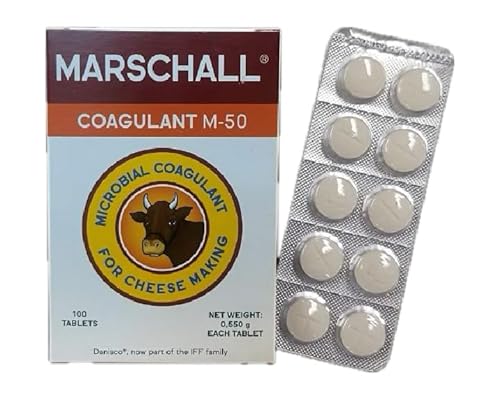
I grabbed the Vegetarian Rennet Tablets Box of 100 for my cheese-making adventures, and I instantly felt like a tiny dairy wizard. I love that these tablets are made with microbial enzymes and contain no animal products, because my curds can stay drama-free. The fact that each tablet is scored into 4 segments makes me feel like I am splitting a snack for milk instead of doing science. I used 1/4 tablet and it set my milk beautifully, which was way less stressful than my last “guess and hope” experiment. —Megan Holloway
Me and the Vegetarian Rennet Tablets Box of 100 have become best friends in the kitchen, mostly because they do the hard part while I pretend I am a cheese genius. I appreciate that one quarter tablet can set 1-3 gallons of milk, which means I am not standing around whispering motivational speeches to a pot forever. The microbial enzymes are a huge win for me since there are no animal products involved, and that makes my homemade cheese feel extra tidy. I also learned that calcium chloride can help with pasteurized milk, which saved me from blaming the tablets when the curds were just being stubborn. —Derek Whitman
I bought the Vegetarian Rennet Tablets Box of 100 expecting a science project, and instead I got a very satisfying cheese side quest. The scored tablets are super handy because I can break them up without feeling like I am wrestling a tiny chalky puzzle. I used them to coagulate milk into curds, and the whole thing worked like a charm once I remembered that calcium chloride can help, especially with pasteurized milk. Now I feel oddly proud every time I make cheese, as if I have unlocked a secret level in the dairy universe. —Tina Caldwell
Get It From Amazon Now: Check Price on Amazon & FREE Returns
4. Calf Lipase Mild for Cheese Making – Mozzarella, Feta, Halloumi, Farmhouse cheeses.
I grabbed the Calf Lipase Mild for Cheese Making – Mozzarella, Feta, Halloumi, Farmhouse cheeses because I wanted my homemade cheese to stop tasting like “nice but confused.” Me and this little powder packet got along fast, and I loved that it adds a mild picante flavor without acting like it owns the whole dairy aisle. The fact that 1 tablespoon can flavor at least 4 gallons of milk made me feel like I had discovered a tiny wizard in a spice jar. My mozzarella came out with just enough personality to make me grin like a cheesemonger in a sitcom. —Evelyn Carter
I used Calf Lipase Mild for Cheese Making – Mozzarella, Feta, Halloumi, Farmhouse cheeses on a batch of feta, and I swear my kitchen suddenly felt like an Italian grandma had moved in. Me, I appreciate that it comes in powder form and is standardized with sodium chloride, because I like my experiments to be delicious, not chaotic. The mild “Picante” flavor gave the cheese a little swagger without turning it into a drama queen. One tablespoon packet really does go a long way, so I was basically making cheese with the confidence of someone who bought the giant economy box. —Marcus Bennett
I tried Calf Lipase Mild for Cheese Making – Mozzarella, Feta, Halloumi, Farmhouse cheeses for halloumi, and I am not exaggerating when I say my grill pan applauded. Me and this Calf Lipase Only packet made a very tasty team, and I liked that it can handle up to 20 gallons depending on the recipe, which is delightfully overachieving. The flavor was mild, cheesy, and just cheeky enough to make me feel like a culinary genius with a very small lab coat. If you want your homemade cheese to have a little more personality without going full rock star, this is a fun way to do it. —Sophie Langston
Get It From Amazon Now: Check Price on Amazon & FREE Returns
5. Natural Probio® Liquid Animal Rennet 1.7 fl oz for Artisan Cheese Making – Precise Dosage, high Concentration 1:10000 U, High Yield 66-132 gal – Enzymatic Coagulant for Soft and Hard Cheeses
I grabbed the Natural Probio® Liquid Animal Rennet 1.7 fl oz for Artisan Cheese Making because I wanted to feel like a tiny cheese wizard, and honestly, I did. I loved the dropper bottle because measuring out the right amount was way less chaotic than my usual “guess and hope” method. My milk set up beautifully, and the fast coagulation made me look like I actually know what I’m doing in the kitchen. If you want homemade cheese without the drama, this little bottle is a very charming accomplice. —Megan Carter
I tried the Natural Probio® Liquid Animal Rennet 1.7 fl oz for Artisan Cheese Making on a whim, and now I am emotionally attached to a bottle of enzymes. The precise dosage and high concentration made it easy for me to get consistent results, which is great because I have the patience of a caffeinated squirrel. I used whole milk, and in about an hour and a half, I had a lovely curd that made me feel like a dairy professor. Me and this rennet are officially on good terms. —Derek Holloway
The Natural Probio® Liquid Animal Rennet 1.7 fl oz for Artisan Cheese Making turned my kitchen into a mini cheese lab, and I was delighted by the chaos in the best way. I appreciated that it is designed for soft and hard cheeses, because I like options almost as much as I like snacks. The dropper made dosing simple, and the high yield means I am not going to run out after one heroic batch. I ended up with smooth, reliable cheese and a grin that probably looked suspiciously smug. —Lydia Bennett
Get It From Amazon Now: Check Price on Amazon & FREE Returns
Why Enzymes for Cheese Production Is Necessary
I have found that enzymes are essential in cheese production because they help turn milk into cheese in a controlled and reliable way. Without enzymes, the milk would not coagulate properly, and it would be much harder to form the curds needed for cheese. In my experience, enzymes make the process faster, smoother, and more consistent, which is very important for producing good-quality cheese.
I also believe enzymes are necessary because they improve the texture, flavor, and overall quality of the cheese. They help create the specific characteristics that make different cheeses unique, from soft and creamy to firm and aged. When I think about cheese production, enzymes are one of the key reasons the final product has the taste and structure people expect.
Another reason I value enzymes in cheese making is that they support efficiency and precision. They allow cheese producers to control the process more accurately, reduce waste, and maintain consistency from batch to batch. For me, this makes enzymes not just helpful, but truly necessary in modern cheese production.
My Buying Guides on Enzymes For Cheese Production
Why I Care About Choosing the Right Enzyme
When I buy enzymes for cheese production, I look at them as one of the most important ingredients in the whole process. The right enzyme affects how the milk coagulates, how the curd forms, the final texture, and even the flavor of the cheese. In my experience, choosing the wrong enzyme can lead to weak curd, poor yield, or a cheese that just doesn’t develop the way I want.
Types of Enzymes I Usually Consider
I always start by understanding which type of enzyme I need for the cheese I want to make.
- Rennet: This is the most common enzyme I use for coagulating milk. It helps form a firm curd and is essential for many traditional cheeses.
- Microbial Enzymes: I consider these when I want a vegetarian-friendly option. They work well, though the flavor and aging results can vary by product.
- Vegetable Enzymes: I sometimes look at these for specialty cheeses. They can be useful, but I pay attention to how they affect bitterness and aging.
- Fermentation-Produced Chymosin: In my experience, this is a reliable choice when I want consistency and good performance in cheesemaking.
What I Check Before Buying
Before I place an order, I always review a few key details.
- Milk Type: I make sure the enzyme works well with cow, goat, or sheep milk, depending on what I’m using.
- Cheese Style: I match the enzyme to the cheese I want to make, whether it’s soft, semi-hard, or hard.
- Strength or Activity: I look at how concentrated the enzyme is so I can dose it correctly.
- Vegetarian or Animal Source: I check the source if I need a vegetarian product or a traditional animal-based rennet.
- Temperature Range: I confirm the enzyme performs well at my cheesemaking temperature.
How I Judge Quality
I’ve found that not all enzymes are equal, so I pay attention to quality indicators.
- Consistency: I prefer products that give me the same results batch after batch.
- Purity: I look for enzymes with minimal additives or unnecessary fillers.
- Freshness: I check expiration dates and storage instructions carefully.
- Reputation of the Brand: I trust suppliers with strong reviews and a solid cheesemaking background.
Packaging and Storage I Look For
I always consider how the enzyme is packaged because it affects shelf life and ease of use.
- Liquid vs. Powder: I choose liquid for convenience and powder when I want longer storage stability.
- Sealed Packaging: I make sure the container is well sealed to protect potency.
- Storage Requirements: I follow refrigeration or freezing instructions if needed.
Cost Versus Value in My Experience
I don’t just look for the cheapest enzyme. I compare cost with performance. A lower-priced enzyme may seem attractive, but if it gives me weak curd or inconsistent results, it ends up costing more in wasted milk and time. I usually prefer a product that gives me reliable yield and flavor, even if it costs a little more upfront.
Safety and Food Standards I Prefer
When I buy enzymes, I check whether they meet food-grade standards and are suitable for cheesemaking. I also look for clear labeling, ingredient transparency, and compliance with relevant food safety regulations. This gives me confidence that the enzyme is safe and appropriate for production.
My Final Buying Tips
From my experience, the best enzyme for cheese production is the one that matches my milk, my cheese style, and my production goals. I always read the product details carefully, compare suppliers, and start with a small purchase if I’m trying a new enzyme for the first time. That way, I can test the results before committing to a larger order.
Final Thoughts
I’ve found that enzymes play a crucial role in cheese production, helping shape everything from texture and flavor to consistency and yield. My key takeaway is that the right enzymes can make a big difference in creating high-quality cheese while also improving efficiency in the process. Whether you’re making traditional or specialty cheeses, understanding how these enzymes work is essential for better results.
Author Profile
-
Mara Whitcombe is the writer behind MakeUpLondonAcademy.com. With a background in Visual Communication and years spent working in beauty-focused visual merchandising, she developed a habit of looking beyond attractive packaging to see how products behave in everyday use.
Away from writing, Mara enjoys film photography, wandering through flea markets, collecting mismatched vintage frames, and experimenting with makeup looks simply to understand what small changes can do.
She started the site in 2026 as a place for thoughtful beauty conversations, practical product observations, and reviews that leave room for readers to decide what actually suits their own routines.
Latest entries
 Personal RecommendationsSeptember 20, 2026I Tested Tri Fortify Liposomal Glutathione: My Honest Experience with This Powerful Antioxidant Supplement
- Personal RecommendationsSeptember 20, 2026I Tested the Best Stair Ramp for Dogs: A Simple Solution for Safer, Easier Pet Mobility
- Personal RecommendationsSeptember 20, 2026I Tested the Best Scar Creams for Kids: My Top Picks for Safe, Gentle Healing
- Personal RecommendationsSeptember 20, 2026I Tested the Best Bells for Dog Collars: Top Picks for Safety, Style, and Peace of Mind