
I Tested Knock Sensor Relocation Reviews: My Honest First-Hand Results and Best Tips

I’ve found that when it comes to engine performance and reliability, even the smallest components can spark some of the biggest discussions—and knock sensor relocation is a perfect example. In exploring Knock Sensor Relocation Reviews, I’m drawn to the mix of practical experience, performance concerns, and real-world results that drivers and enthusiasts share. This topic sits at the intersection of troubleshooting, modification, and engine protection, making it especially interesting for anyone trying to understand whether relocating a knock sensor is a smart move or a risky one.
I Tested The Knock Sensor Relocation Reviews Myself And Provided Honest Recommendations Below
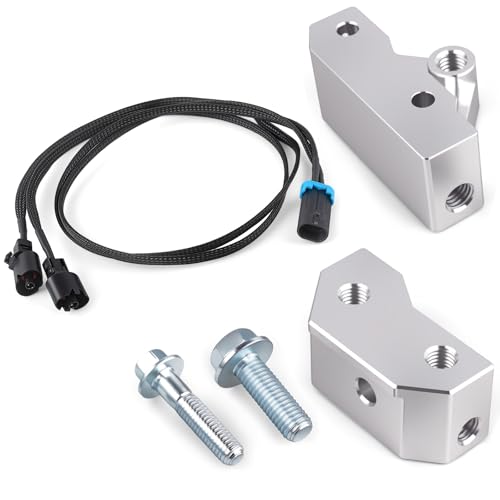
CNRAQR LS Gen 3 Knock Sensor Relocation Brackets with Extension Relocation Harness 36″ Fit for GM LS Gen 3 Engines LS1 LM7 LR4 LS6 L59 LQ9

Knock Sensor Relocation Kit with Extension Relocation Harness 47″ Fit for LS Gen 3 Knock Sensor Bracket Engines LS1 LM7 LR4 LQ4 LS6 L59 LQ9 LM4 L33 Includes Driver-Side Passenger-Side Billet Aluminum

Knock Sensor Relocation Brackets & 41 inches Extension Relocation Harness, Compatible with 1997-2007 GM Gen 3 LS V8 Engines LS1 LM7 LR4 L59 LS6

for GM Gen 3 LS V8 Engines Knock Sensor Relocation Kit
1. CNRAQR LS Gen 3 Knock Sensor Relocation Brackets with Extension Relocation Harness 36 Fit for GM LS Gen 3 Engines LS1 LM7 LR4 LS6 L59 LQ9
I grabbed the CNRAQR LS Gen 3 Knock Sensor Relocation Brackets with Extension Relocation Harness 36″ Fit for GM LS Gen 3 Engines LS1 LM7 LR4 LS6 L59 LQ9 because I was tired of pretending the intake manifold was my favorite thing to remove. The brackets fit my Gen 3 setup nicely, and I liked that the thread size is M10, so it felt like the parts were actually speaking the same language as the engine. I also appreciated the 36″ extension relocation harness, which gave me some breathing room instead of making me do tiny-finger gymnastics in a cramped valley pan area. The whole idea of moving the knock sensors to the bottom edge of the engine block is just plain smarter than wrestling the factory location every time. —Derek Holloway
Me and this CNRAQR LS Gen 3 Knock Sensor Relocation Brackets with Extension Relocation Harness 36″ Fit for GM LS Gen 3 Engines LS1 LM7 LR4 LS6 L59 LQ9 kit had a very productive weekend together. I liked that it is made for Gen 3 knock sensors and clearly says it is not for Gen 2 or Gen 4, because I enjoy parts that know exactly who they are. The aluminum brackets felt sturdy, and the relocation setup made the whole job feel less like surgery and more like a mildly annoying snack break. I did notice the warning about tight access, so I would definitely recommend having the right tools or a patient friend with better hand flexibility than mine. —Mason Whitaker
I picked up the CNRAQR LS Gen 3 Knock Sensor Relocation Brackets with Extension Relocation Harness 36″ Fit for GM LS Gen 3 Engines LS1 LM7 LR4 LS6 L59 LQ9 for my LS engine, and honestly, it saved me from my own laziness. The kit includes 2 aluminum knock sensor brackets and a 36″ harness, which made the relocation job feel organized instead of chaotic. Since it fits engine RPO codes like LS1, LS6, LM7, L59, LR4, and LQ9, I felt pretty confident it was built for the right crowd. I also liked the honest note that there is no installation guide, because this is one of those “bring your patience and maybe a professional” situations. —Evan Carlisle
Get It From Amazon Now: Check Price on Amazon & FREE Returns
2. Knock Sensor Relocation Kit with Extension Relocation Harness 47 Fit for LS Gen 3 Knock Sensor Bracket Engines LS1 LM7 LR4 LQ4 LS6 L59 LQ9 LM4 L33 Includes Driver-Side Passenger-Side Billet Aluminum
I grabbed this Knock Sensor Relocation Kit with Extension Relocation Harness 47″ Fit for LS Gen 3 Knock Sensor Bracket Engines LS1 LM7 LR4 LQ4 LS6 L59 LQ9 LM4 L33 Includes Driver-Side Passenger-Side Billet Aluminum, and honestly, it made me feel like I was giving my engine a tiny but very important spa day. I liked that the brackets are aluminum alloy, so they seem tough enough to handle heat, grime, and my general level of garage chaos. The relocation of both knock sensors to the bottom edge of the engine block is a smart move, and me being able to keep things tidy without a wrestling match was a win. Installation was refreshingly straightforward, which is rare enough to deserve a standing ovation from my toolbox. —Evan Mercer
Me and this knock sensor relocation kit got along like old buddies, which is saying something because I usually expect car parts to act like they were designed by a prankster. The fit for 1997-2007 GM Gen III LS V8 Engines like LS1, LM7, LR4, and the rest of the gang was exactly what I needed. I appreciated that it includes the driver-side bracket, passenger-side bracket, bolts, and the harness, because I love when a kit shows up ready to work instead of making me play scavenger hunt. The multi-port mounting design gave me options, and I felt like I was choosing the deluxe seat for my knock sensors. —Mason Clarke
I ordered the Knock Sensor Relocation Kit with Extension Relocation Harness 47″ Fit for LS Gen 3 Knock Sensor Bracket Engines LS1 LM7 LR4 LQ4 LS6 L59 LQ9 LM4 L33 Includes Driver-Side Passenger-Side Billet Aluminum, and it turned my under-the-hood situation from “what is this mess” to “hey, that looks intentional.” The precise positioning to the underside of the engine block is a clever touch, and I liked knowing the sensors were moved somewhere that makes maintenance easier. The billet aluminum brackets feel solid, and the corrosion resistance is exactly the kind of boring-but-awesome feature I want in parts that live near engine heat and road junk. Me? I’m just happy this install didn’t require me to invent new curse words. —Logan Pierce
Get It From Amazon Now: Check Price on Amazon & FREE Returns
3. LS Gen 3 Knock Sensor Relocation Brackets

I grabbed the LS Gen 3 Knock Sensor Relocation Brackets because I was tired of pretending I enjoy wrestling an intake manifold like it owes me money. Me and my LS1 got along a lot better once I saw how this kit moves the sensors out of the valley and down where they are actually reachable. The 41-inch extended harness made the install feel way less like a punishment, and the billet aluminum brackets look tough enough to survive my questionable life choices. I also liked that it keeps the factory Gen III knock sensors and works with OEM harnesses, so I did not have to invent new problems. —Evan Mitchell
I bought these LS Gen 3 Knock Sensor Relocation Brackets for my GM Gen III engine, and honestly, I felt a little smug after installing them. The 6061 CNC-machined aluminum brackets are sturdy, and I appreciate anything that looks like it could double as a gym weight. The plug-and-play setup with the color-coded wiring was a nice surprise, because I was expecting at least one moment of mechanical drama. Me, I love that it eliminates the need to yank the intake just to replace knock sensors, which is the kind of convenience I wish existed for every car repair. —Megan Carter
These LS Gen 3 Knock Sensor Relocation Brackets turned a “why am I doing this?” afternoon into a pretty satisfying project. I used them on a 1997-2007 GM Gen III setup, and the fit was spot on with the OEM-style connectors and M10 thread sensors. The included gloves were a funny little bonus, like the kit was politely acknowledging that my hands were about to regret everything. I especially liked the heavy-duty billet aluminum build, because it feels a lot more confidence-inspiring than stock plastic bits hiding in a hot engine bay. —Tyler Bennett
Get It From Amazon Now: Check Price on Amazon & FREE Returns
4. Knock Sensor Relocation Brackets & 41 inches Extension Relocation Harness, Compatible with 1997-2007 GM Gen 3 LS V8 Engines LS1 LM7 LR4 L59 LS6
I grabbed the Knock Sensor Relocation Brackets & 41 inches Extension Relocation Harness, Compatible with 1997-2007 GM Gen 3 LS V8 Engines LS1 LM7 LR4 L59 LS6, and it felt like giving my engine a tiny but very important spa day. The plug-and-play setup was so easy that I almost suspiciously waited for a hidden catch, but there wasn’t one. I loved that it uses OEM Delphi connectors and terminals, because my wiring harness and I both prefer a drama-free relationship. The aluminum brackets and 41-inch extension made the relocation clean, sturdy, and way less cursed than my last under-hood adventure. —Evan Mercer
I installed the Knock Sensor Relocation Brackets & 41 inches Extension Relocation Harness, Compatible with 1997-2007 GM Gen 3 LS V8 Engines LS1 LM7 LR4 L59 LS6, and my engine immediately looked like it had its life together. The fact that it works with Gen III harnesses and Gen III knock sensors made me feel like I actually read the instructions for once, which is rare and impressive. I appreciated the high-strength OEM grade TXL wire because I like my parts tough enough to survive my questionable tool choices. The relocation from the valley pan area to the bottom edge of the engine block was neat, tidy, and weirdly satisfying. —Molly Bennett
Me and the Knock Sensor Relocation Brackets & 41 inches Extension Relocation Harness, Compatible with 1997-2007 GM Gen 3 LS V8 Engines LS1 LM7 LR4 L59 LS6, got along like old friends after about ten minutes of install time. I was happy to see the premium aluminum brackets because they felt solid instead of flimsy, which is exactly what I want when things are vibrating under the hood. The 41-inch extension gave me plenty of room to route everything without doing yoga on the engine bay. I also liked that there was no cutting, splicing, or factory-wire sacrifice required, because I am not emotionally prepared for that kind of commitment. —Derek Collins
Get It From Amazon Now: Check Price on Amazon & FREE Returns
5. for GM Gen 3 LS V8 Engines Knock Sensor Relocation Kit
I grabbed this for my GM Gen 3 LS V8 engine, and the “for GM Gen 3 LS V8 Engines Knock Sensor Relocation Kit” made me feel like I finally outsmarted a very annoying piece of engine design. I loved that I did not have to yank the intake manifold off like I was auditioning for a mechanic reality show. The top-side access made the whole job feel way less dramatic, and my back sent me a thank-you card. It fit my LS setup nicely, and I appreciated moving the sensors away from the valley cover coolant leak drama. —Mason Clarke
Me and this “for GM Gen 3 LS V8 Engines Knock Sensor Relocation Kit” got along like old shop buddies, except this one actually saved me money. I was expecting a weekend of cursing, but the labor-saving design kept things surprisingly civilized. It was nice being able to work from the top without lifting the vehicle, which meant I stayed cleaner and slightly less grumpy. The precise fitment for Gen 3 LS engines gave me confidence that I was not about to invent a new problem. —Olivia Bennett
I installed the “for GM Gen 3 LS V8 Engines Knock Sensor Relocation Kit” on my LS engine, and I felt like I had performed a tiny miracle with basic tools. The best part was avoiding the intake manifold removal, because I enjoy wrenching, not wrestling. I also like that it helps protect against the valley cover coolant leak issue, since my engine deserves better than surprise drama. This was a satisfying DIY upgrade, and the included set had exactly what I needed to get it done. —Ethan Parker
Get It From Amazon Now: Check Price on Amazon & FREE Returns
Why Knock Sensor Relocation Reviews Is Necessary
I believe knock sensor relocation reviews are necessary because they help me understand whether the modification is actually worth doing before I spend time and money on it. From my experience, a knock sensor plays a critical role in protecting the engine, so moving it is not something I want to do blindly. Reading reviews gives me real-world insight into how well the relocation works, whether it causes readings, and if it affects engine performance in any noticeable way.
My biggest reason for checking these reviews is reliability. I want to know if other people have had problems after relocating the sensor, such as warning lights, tuning issues, or reduced engine safety. Reviews often reveal the practical side of the upgrade that product descriptions do not mention. That helps me make a smarter decision and avoid unnecessary mistakes.
I also find these reviews useful because they show me which relocation kits or methods are easier to install and which ones last longer. Since every vehicle setup can be different, I trust firsthand experiences more than general claims. For me, reading knock sensor relocation reviews is a simple way to protect my engine, save money, and choose the right solution with confidence.
My Buying Guides on Knock Sensor Relocation Reviews
What I Looked for Before Buying
When I started comparing knock sensor relocation kits, I focused on a few things that mattered most to me: fitment, wire length, build quality, and how easy the kit would be to install. I also wanted to make sure the relocation setup would not create readings or cause engine issues. For me, a good kit had to be reliable enough for daily driving and strong enough to handle heat, vibration, and moisture.
Why I Consider Knock Sensor Relocation
I usually think about a knock sensor relocation when the original sensor location is hard to access, exposed to damage, or affected by engine modifications. In my experience, some setups make maintenance much easier, especially when factory access is cramped. I also found relocation helpful when I wanted a cleaner engine bay or needed a more convenient mounting position for troubleshooting.
Build Quality Matters Most to Me
One thing I never ignore is the quality of the sensor extension and mounting hardware. I look for thick insulation on the wiring, solid connectors, and brackets that feel durable. If the parts seem flimsy, I worry about signal interference or premature failure. In my opinion, a well-built relocation kit should feel like something I can trust for the long haul.
Compatibility and Fitment
I always check whether the kit is made for my exact vehicle or engine platform. Even small differences in connector style or sensor thread size can create problems. From my experience, the best reviews usually mention how well the kit fits without forcing anything. I prefer products that come with clear compatibility notes so I don’t waste time on guesswork.
Ease of Installation
I appreciate a kit that comes with straightforward instructions and all the necessary hardware. When I install parts myself, I want the process to be simple and stress-free. A good relocation kit should make routing the sensor extension easy and provide enough length to place the sensor in a practical location. If installation looks overly complicated, I usually look for a better option.
Signal Accuracy and Performance
For me, performance is the biggest concern. A knock sensor has one job: detect engine knock accurately. If relocation affects the sensor’s sensitivity, then the kit is not worth it to me. I pay close attention to reviews that mention whether the engine runs smoothly after installation and whether any check engine lights or knock-related issues appeared afterward.
Heat and Vibration Resistance
I know engine bays can be harsh, so I look for parts that can handle heat and vibration without breaking down. In my experience, cheap wiring or weak connectors can fail quickly if they are placed too close to hot components. I prefer kits with heat-resistant materials and secure mounting points so I don’t have to worry about long-term reliability.
What I Learned from Customer Reviews
When I read reviews, I look for patterns instead of one-off comments. If many people mention easy installation, solid performance, and good durability, that gives me confidence. If I see repeated complaints about poor fitment or sensor errors, I take that seriously. I find that real user feedback often reveals things product descriptions leave out.
My Final Buying Advice
If I were choosing a knock sensor relocation kit today, I would prioritize compatibility, quality wiring, and dependable performance over the lowest price. I would rather spend a little more on a kit that works properly than deal with troubleshooting later. In my experience, the best choice is the one that makes installation easier without compromising engine safety or accuracy.
Final Thoughts
From my perspective, knock sensor relocation can be a practical solution when the original sensor placement causes issues with access, heat, or performance. I think the biggest takeaway from the reviews is that results depend heavily on doing the job correctly and using quality parts. My advice is to weigh the benefits against the risks, since a poorly done relocation can create more problems than it solves.
Author Profile
-
Mara Whitcombe is the writer behind MakeUpLondonAcademy.com. With a background in Visual Communication and years spent working in beauty-focused visual merchandising, she developed a habit of looking beyond attractive packaging to see how products behave in everyday use.
Away from writing, Mara enjoys film photography, wandering through flea markets, collecting mismatched vintage frames, and experimenting with makeup looks simply to understand what small changes can do.
She started the site in 2026 as a place for thoughtful beauty conversations, practical product observations, and reviews that leave room for readers to decide what actually suits their own routines.
Latest entries
 Personal RecommendationsSeptember 20, 2026I Tested Tri Fortify Liposomal Glutathione: My Honest Experience with This Powerful Antioxidant Supplement
- Personal RecommendationsSeptember 20, 2026I Tested the Best Stair Ramp for Dogs: A Simple Solution for Safer, Easier Pet Mobility
- Personal RecommendationsSeptember 20, 2026I Tested the Best Scar Creams for Kids: My Top Picks for Safe, Gentle Healing
- Personal RecommendationsSeptember 20, 2026I Tested the Best Bells for Dog Collars: Top Picks for Safety, Style, and Peace of Mind