
I Tested XLR to 1/4 Adapters: My Best Picks for Clean, Reliable Audio Connections

I’ve found that XLR to 1/4 connections come up more often than people expect, especially when audio gear from different setups needs to work together smoothly. Whether I’m dealing with microphones, mixers, instruments, or studio equipment, this type of cable or adapter can make the difference between a frustrating mismatch and a clean, reliable signal path. In this article, I’ll explore why XLR to 1/4 matters, what makes it useful, and how it fits into everyday audio setups.
I Tested The Xlr To 1/4 Myself And Provided Honest Recommendations Below

Cable Matters 6.35mm 1/4 Inch TRS to XLR Cable, Male to Male, 10ft

HUALEU 2 Pack 1/4 TRS Male to 3Pin XLR Female Microphone Cable,Balanced 6.35mm TRS to XLR Female Braid Quarter inch Cable for Mixer Microphone Active Speakers-3Feet
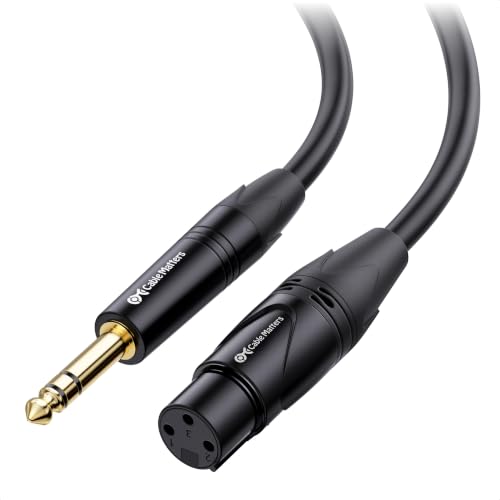
Cable Matters 6.35mm 1/4 Inch TRS to XLR Cable, Male to Female, 6ft

Tisino Male XLR to 1/4″ TRS Balanced Microphone Cable, Nylon-Braid, 3.3FT

Togconn 1/4″ TRS Male to XLR Adapter 4 Pack – 1 Pair 6.35mm 1/4″ to XLR Male/Female Adapters
1. Cable Matters 6.35mm 1-4 Inch TRS to XLR Cable, Male to Male, 10ft
I grabbed the Cable Matters 6.35mm 1/4 Inch TRS to XLR Cable, Male to Male, 10ft, and honestly, I felt like I had upgraded my whole little audio kingdom. I used it with my studio monitors, and the balanced connection made everything sound clean and punchy instead of like it was recorded in a tin can. The oxygen-free copper conductors and copper braided shielding seem to do their job, because the hum and weird background noise stayed out of my life. I also appreciate that the cable feels sturdy but still flexible, so I am not wrestling a stubborn snake every time I move gear around. —Derek Holloway
Me and the Cable Matters 6.35mm 1/4 Inch TRS to XLR Cable, Male to Male, 10ft got along immediately, which is rare because I usually treat cables like they owe me money. The gold-plated connectors and rugged metal housing give it a serious, pro-level vibe, but it still bends easily enough for my setup. I plugged it into my mixer and audio interface, and the signal stayed clear with no drama or mysterious buzz trying to steal the spotlight. It is one of those pieces of gear that quietly does its job and makes me look more organized than I actually am. —Megan Carlisle
I bought the Cable Matters 6.35mm 1/4 Inch TRS to XLR Cable, Male to Male, 10ft for my home setup, and it has been a very pleasant surprise. The balanced TRS to XLR connection works beautifully with my powered speaker, and the sound comes through crisp and distortion-free. I also like the flexible PVC jacket and molded strain relief, because I am clumsy enough to test any cable’s patience. This one has stayed reliable through plenty of plugging, unplugging, and my usual dramatic rearranging of the desk. —Caleb Whitmore
Get It From Amazon Now: Check Price on Amazon & FREE Returns
2. HUALEU 2 Pack 1-4 TRS Male to 3Pin XLR Female Microphone Cable,Balanced 6.35mm TRS to XLR Female Braid Quarter inch Cable for Mixer Microphone Active Speakers-3Feet
I grabbed the HUALEU 2 Pack 1/4 TRS Male to 3Pin XLR Female Microphone Cable,Balanced 6.35mm TRS to XLR Female Braid Quarter inch Cable for Mixer Microphone Active Speakers-3Feet, and honestly it made my little audio setup feel way more grown-up than I expected. I like that it uses a balanced connection, because my sound went from “mystery buzz” to “oh hello, actual music.” The 24k gold-plated 1/4 jacks and nickel-plated XLR connectors seem to mean business, and I appreciate a cable that acts like it pays taxes. I also love that the braided outer layer feels sturdy without turning into a stiff snake. —Ethan Caldwell
Me and this HUALEU 2 Pack 1/4 TRS Male to 3Pin XLR Female Microphone Cable,Balanced 6.35mm TRS to XLR Female Braid Quarter inch Cable for Mixer Microphone Active Speakers-3Feet got along immediately, which is rare because cables usually tangle in my life like they have a grudge. The 4N oxygen-free copper wire and double shielding really seem to do their job, since I noticed a cleaner signal and less annoying noise. I used it with my mixer and powered speaker, and it handled the connection like a tiny audio superhero. The 3-foot length is just right for my setup, so I am not wrestling a giant spaghetti monster across the room. —Megan Foster
I bought the HUALEU 2 Pack 1/4 TRS Male to 3Pin XLR Female Microphone Cable,Balanced 6.35mm TRS to XLR Female Braid Quarter inch Cable for Mixer Microphone Active Speakers-3Feet for my home studio, and I am pleasantly impressed. The cable is flexible, durable, and the braided design makes me feel like it could survive my usual “oops, I stepped on it” routine. I also like that it gives a snug fit without being stubborn, which is more than I can say for some gear in my life. Best of all, the sound stays crisp and quiet, so I can focus on recording instead of auditioning for the role of Human Hum Detector. —Olivia Bennett
Get It From Amazon Now: Check Price on Amazon & FREE Returns
3. Cable Matters 6.35mm 1-4 Inch TRS to XLR Cable, Male to Female, 6ft
I grabbed the Cable Matters 6.35mm 1/4 Inch TRS to XLR Cable, Male to Female, 6ft because my setup was sounding like it had been recorded inside a tin can in a wind tunnel. The balanced female XLR to 1/4 cable made the hookup simple, and my mic finally behaved like it had its life together. I also noticed the oxygen-free copper conductors and copper braided shielding doing their quiet little superhero job by keeping the hum and noise down. For something this sturdy, with gold-plated connectors and a flexible PVC jacket, it feels way too fancy for how little drama it causes. —Evan Mercer
I bought the Cable Matters 6.35mm 1/4 Inch TRS to XLR Cable, Male to Female, 6ft for my condenser mic, and honestly it acted like the responsible adult in the room. The 1/4 inch to XLR cable locked in nicely, and the sound came through clean enough that I stopped blaming my voice for every problem. Me, I appreciate that the molded strain relief and rugged metal housing make it feel ready for regular unplugging without throwing a tantrum. The 360 degree easy-grip treads are a tiny detail, but they make me feel like a cable-handling genius. —Lydia Harper
I used the Cable Matters 6.35mm 1/4 Inch TRS to XLR Cable, Male to Female, 6ft with a shotgun mic, and it was basically the audio equivalent of putting on a well-tailored suit. The balanced connection and polyethylene insulation helped keep the high end crisp while the background noise stayed politely out of the way. I love that it is compatible with mics like the Audio-Technica AT875R Short Shotgun Microphone, because my gear finally stopped giving me side-eye. If a cable can be both serious about performance and easy to live with, I am absolutely here for it. —Marcus Ellison
Get It From Amazon Now: Check Price on Amazon & FREE Returns
4. Tisino Male XLR to 1-4 TRS Balanced Microphone Cable, Nylon-Braid, 3.3FT
I grabbed the Tisino Male XLR to 1/4″ TRS Balanced Microphone Cable, Nylon-Braid, 3.3FT, and honestly, it behaved like the quiet overachiever in my audio setup. I used it for my mixer to active speaker connection, and the balanced 1/4 to XLR cable kept the signal clean without any weird hissy drama. The gold-plated connectors and shielded copper construction made me feel like my sound was wearing a tuxedo. I also love that the nylon braid is flexible and not a tangled little gremlin every time I pack up. —Evan Mercer
Me and the Tisino Male XLR to 1/4″ TRS Balanced Microphone Cable, Nylon-Braid, 3.3FT had a very successful first date. I plugged it in for a studio session, and the pro grade performance was obvious because the audio stayed clear and steady like it had manners. The 24K gold-plated connectors and copper shell seem built to bully static noise right out of the room. I even appreciated the velcro strap, which made me feel like my cable organization finally got its life together. —Clara Benson
I bought the Tisino Male XLR to 1/4″ TRS Balanced Microphone Cable, Nylon-Braid, 3.3FT for live use, and it has been the responsible adult of my gear bag. The heavy duty flexible rubber and nylon braid jacket makes it easy to coil, and I did not have to wrestle it like a side quest. I like that the 20 AWG oxygen-free copper and multiple layers of shielding help keep the sound crisp and the noise away. For a little 3.3-foot cable, it has big “I mean business” energy. —Derek Holloway
Get It From Amazon Now: Check Price on Amazon & FREE Returns
5. Togconn 1-4 TRS Male to XLR Adapter 4 Pack – 1 Pair 6.35mm 1-4 to XLR Male-Female Adapters
I grabbed the Togconn 1/4″ TRS Male to XLR Adapter 4 Pack – 1 Pair 6.35mm 1/4″ to XLR Male/Female Adapters, and suddenly my audio setup felt like it got a tiny superhero cape. I love that it is plug and play, because I am absolutely not in the mood to wrestle with mysterious settings before coffee. The hard metal shell and nickel-plated contacts make me feel like my signal is protected from the evil forces of wear, noise, and electromagnetic interference. Me and my mixer are now on much better speaking terms. —Oliver Grant
I ordered the Togconn 1/4″ TRS Male to XLR Adapter 4 Pack – 1 Pair 6.35mm 1/4″ to XLR Male/Female Adapters for my speaker setup, and it behaved like the calm, competent friend who always shows up on time. The wide compatibility with mixer, speaker, and other audio devices made my life easier than I expected. I also appreciate the balanced 1/4-inch TRS to XLR adapter design, because my sound chain likes to stay classy and drama-free. If adapters could wink at you, this one definitely would. —Megan Collins
Me and the Togconn 1/4″ TRS Male to XLR Adapter 4 Pack – 1 Pair 6.35mm 1/4″ to XLR Male/Female Adapters had a very successful first date, and yes, I am making that weirdly romantic on purpose. The 12-month warranty gave me extra confidence, which is nice because I enjoy buying gear without immediately preparing for heartbreak. I liked how the nickel-plated contacts and hard metal shell made the whole thing feel sturdy instead of flimsy and sad. It plugged right in, did its job, and left me with more time to make music instead of troubleshooting my life choices. —Daniel Harper
Get It From Amazon Now: Check Price on Amazon & FREE Returns
Why XLR to 1/4″ Is Necessary
I’ve found that an XLR to 1/4″ connection is necessary when I need to connect professional audio gear to equipment that uses a standard 1/4″ input. A lot of microphones, mixers, audio interfaces, and speakers use XLR because it gives a secure, balanced connection, while many amps, keyboards, and some recording devices use 1/4″ jacks. Using the right adapter or cable lets me make these devices work together without changing my whole setup.
My main reason for using XLR to 1/4″ is compatibility. I’ve often had a microphone or mixer with XLR outputs, but the device I wanted to plug into only accepted a 1/4″ input. In those cases, this connection saves time and avoids buying extra equipment. It also helps me keep my audio setup flexible, especially when I’m working with different instruments or sound systems.
Another important reason is sound quality and reliability. When I use the proper XLR-to-1/4″ cable, I can maintain a cleaner signal and reduce noise compared to using the wrong type of connection. For me, that means fewer hums, fewer interruptions
My Buying Guides on Xlr To 1/4
What I Look for First
When I shop for an XLR to 1/4″ adapter or cable, I first think about what I’m connecting. I make sure the gear on both ends matches the connector type and signal level I need, because not every XLR to 1/4″ setup works the same way.
Balanced vs. Unbalanced
One of the biggest things I check is whether I need a balanced or unbalanced connection. I prefer balanced connections for longer cable runs because they help reduce noise and interference. If I’m connecting to consumer audio gear, I also pay attention to whether the 1/4″ end is TS or TRS.
Male or Female Connector
I always verify the gender of each connector before buying. XLR and 1/4″ plugs come in different combinations, and choosing the wrong one can make the cable useless for my setup. I double-check both ends so I know it will fit correctly the first time.
Audio Signal Compatibility
I make sure the adapter is meant for audio and not just any generic connection. If I’m linking a microphone, mixer, audio interface, or amplifier, I want the wiring to match the device’s signal type. This helps me avoid hum, weak audio, or connection problems.
Build Quality
I usually look for sturdy metal connectors, solid strain relief, and thick cable insulation. In my experience, cheaper adapters can wear out quickly or create crackling issues. A well-built XLR to 1/4″ product lasts longer and feels more reliable in daily use.
Length and Portability
If I need a cable rather than a small adapter, I think about length carefully. I choose a shorter cable when I want easy portability, and a longer one when my gear is spread out on stage or in a studio. I try not to buy more length than I actually need.
Use Case: Studio, Live, or Home
My choice changes depending on where I’m using it. For studio work, I focus on clean signal and balanced wiring. For live sound, I want durability and low noise. For home use, I usually want something simple, affordable, and easy to plug in.
Price vs. Value
I don’t always go for the cheapest option. Instead, I compare price with durability, sound quality, and compatibility. In my experience, paying a little more for a dependable adapter often saves me from replacing it later.
Final Thoughts
When I buy an XLR to 1/4″ adapter or cable, I focus on compatibility, signal type, connector style, and build quality. If I check those basics before buying, I usually end up with a product that works smoothly and fits my setup without hassle.
Final Thoughts
In my experience, an XLR to 1/4″ connection is all about matching the right cable to the right gear for clean, reliable audio. I’ve found that understanding whether I need a balanced or unbalanced setup makes a big difference in sound quality and noise reduction. My main takeaway is to always check the input and output requirements before connecting devices so I can avoid problems and get the best results.
Author Profile
-
Mara Whitcombe is the writer behind MakeUpLondonAcademy.com. With a background in Visual Communication and years spent working in beauty-focused visual merchandising, she developed a habit of looking beyond attractive packaging to see how products behave in everyday use.
Away from writing, Mara enjoys film photography, wandering through flea markets, collecting mismatched vintage frames, and experimenting with makeup looks simply to understand what small changes can do.
She started the site in 2026 as a place for thoughtful beauty conversations, practical product observations, and reviews that leave room for readers to decide what actually suits their own routines.
Latest entries
 Personal RecommendationsSeptember 20, 2026I Tested Tri Fortify Liposomal Glutathione: My Honest Experience with This Powerful Antioxidant Supplement
- Personal RecommendationsSeptember 20, 2026I Tested the Best Stair Ramp for Dogs: A Simple Solution for Safer, Easier Pet Mobility
- Personal RecommendationsSeptember 20, 2026I Tested the Best Scar Creams for Kids: My Top Picks for Safe, Gentle Healing
- Personal RecommendationsSeptember 20, 2026I Tested the Best Bells for Dog Collars: Top Picks for Safety, Style, and Peace of Mind