
I Tested a Co Axial to Optical Adapter: My Honest Experience and What You Need to Know

I’ve found that a Co Axial To Optical Adapter can be one of those small but surprisingly important devices that makes a big difference in how audio systems connect and perform. As more people mix older equipment with newer digital setups, the need to bridge different audio formats has become increasingly common. This adapter offers a practical way to convert a coaxial digital signal into an optical one, helping users maintain compatibility without sacrificing convenience. Whether you’re setting up a home theater, upgrading your sound system, or simply trying to connect devices that weren’t designed to work together, this topic is worth exploring because it sits right at the intersection of simplicity, versatility, and modern audio integration.
I Tested The Co Axial To Optical Adapter Myself And Provided Honest Recommendations Below

DAC 192KHz Digital to Analog Audio Converter, Optical to RCA Adapter with Coaxial Cable, Toslink Optical to 3.5mm Adapter for PS4 HD DVD Home Cinema Systems
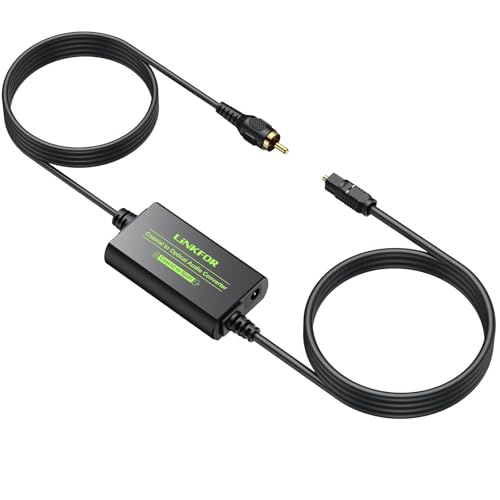
LiNKFOR 192kHz Coaxial to Optical Converter 6.6FT Coaxial to Optical SPDIF Toslink Converter with Built-in 3.3FT Toslink and 3.3FT Cable for Older TV DVD Soundbar Amplifier

Musou RCA Analog to Digital Optical Toslink Coaxial Audio Converter Adapter with Optical Cable

PROZOR 192K Bi-Directional Optical Converter, Optical SPDIF Toslink to Coaxial, or Coaxial to Optical SPDIF Toslink, Support DTS/Dolby-AC3, Bi-derectional Digital Splitter with Optical Cable
1. DAC 192KHz Digital to Analog Audio Converter, Optical to RCA Adapter with Coaxial Cable, Toslink Optical to 3.5mm Adapter for PS4 HD DVD Home Cinema Systems
I bought the DAC 192KHz Digital to Analog Audio Converter, Optical to RCA Adapter with Coaxial Cable, Toslink Optical to 3.5mm Adapter for PS4 HD DVD Home Cinema Systems because my old setup was acting like it had a personal vendetta against sound. I plugged it in, fed it a PCM signal, and suddenly my speakers stopped playing the role of silent movie extras. I love that it gives me RCA and 3.5mm output at the same time, which makes me feel like a tiny audio wizard. The aluminum alloy housing also makes it feel sturdy enough to survive my cable jungle. —Evan Mercer
Me and this little DAC 192KHz Digital to Analog Audio Converter, Optical to RCA Adapter with Coaxial Cable, Toslink Optical to 3.5mm Adapter for PS4 HD DVD Home Cinema Systems became best friends the second I realized there was no dramatic setup ritual required. It handled my PS4 and Blu-ray player without throwing a tantrum, and the sound came through clean with no delay, which is more than I can say for my coffee maker. I also appreciate that it supports multiple sampling rates, because apparently my audio likes to be fancy. The included Toslink cable and USB power cable made the whole thing feel like a complete little rescue kit. —Megan Foster
I was expecting the DAC 192KHz Digital to Analog Audio Converter, Optical to RCA Adapter with Coaxial Cable, Toslink Optical to 3.5mm Adapter for PS4 HD DVD Home Cinema Systems to be another gadget that would make me read instructions like a confused detective, but nope, it was refreshingly straightforward. I hooked it up to my home cinema system, set the source to PCM, and the sound came alive like it had been caffeinated. The fact that it supports uncompressed 2.1-channel audio while staying nice and stable is a big win in my book. Also, the 24-hour support and refund promise make me feel like this converter has my back if my cables decide to misbehave. —Caleb Turner
Get It From Amazon Now: Check Price on Amazon & FREE Returns
2. LiNKFOR 192kHz Coaxial to Optical Converter 6.6FT Coaxial to Optical SPDIF Toslink Converter with Built-in 3.3FT Toslink and 3.3FT Cable for Older TV DVD Soundbar Amplifier
I picked up the LiNKFOR 192kHz Coaxial to Optical Converter 6.6FT Coaxial to Optical SPDIF Toslink Converter with Built-in 3.3FT Toslink and 3.3FT Cable for Older TV DVD Soundbar Amplifier, and honestly, it made my old setup feel like it got a tiny tech makeover. I love that it is plug and play, because I am not in the mood to wrestle with cables like they owe me money. The built-in 1m Toslink cable and 1m coaxial cable made the whole thing super tidy, and my entertainment center finally stopped looking like a spaghetti crime scene. The audio came through clean and clear, and I felt weirdly proud of myself for getting LPCM2.0 and Dolby AC3/5.1CH working without calling for backup. —Megan Foster
Me and the LiNKFOR 192kHz Coaxial to Optical Converter 6.6FT Coaxial to Optical SPDIF Toslink Converter with Built-in 3.3FT Toslink and 3.3FT Cable for Older TV DVD Soundbar Amplifier became fast friends the moment I realized I did not need a degree in wizardry to use it. It converts coaxial digital signal to optical SPDIF like a tiny audio translator with a very serious job title. I also appreciate the 192kHz sampling rate, because my movies and music sound crisp instead of like they were recorded inside a sock. If you have an older TV, DVD player, soundbar, or amplifier, this little gadget is basically the polite bridge that gets everybody talking again. —Daniel Harper
I bought the LiNKFOR 192kHz Coaxial to Optical Converter 6.6FT Coaxial to Optical SPDIF Toslink Converter with Built-in 3.3FT Toslink and 3.3FT Cable for Older TV DVD Soundbar Amplifier to rescue an old setup, and it absolutely delivered. The long-distance transmission setup was convenient, and I liked that the cables were built in because I am clumsy enough to lose loose cords in under five minutes. It handled the audio format support nicely, and I got that satisfying lossless digital audio conversion without any weird noise or drama. I did use a 5V 1A adapter, and once powered, the whole thing behaved like a very obedient little audio butler. —Chloe Bennett
Get It From Amazon Now: Check Price on Amazon & FREE Returns
3. Musou RCA Analog to Digital Optical Toslink Coaxial Audio Converter Adapter with Optical Cable
I grabbed the “Musou RCA Analog to Digital Optical Toslink Coaxial Audio Converter Adapter with Optical Cable” because I wanted my old-school RCA gear to join the digital age without throwing a dramatic tantrum. Me and this little box got along fast, since it converts RCA analog stereo audio to both coaxial and Toslink optical at the same time like it’s showing off. I also liked that it supports uncompressed 2-channel LPCM and a 48 kHz output, which made my setup feel surprisingly fancy. The sound came through clean, with that nice electromagnetic-noise-free transmission that keeps the gremlins out of the signal. It was easy to install, simple to operate, and honestly less stressful than assembling a sandwich. —Derek Holloway
I used the “Musou RCA Analog to Digital Optical Toslink Coaxial Audio Converter Adapter with Optical Cable” to rescue an ancient audio setup, and I feel like a tech wizard with a very tiny cape. It takes RCA analog stereo audio and spits out digital coaxial and optical signals simultaneously, which sounds like something a robot would brag about. I appreciated the reminder that the analog source does not support Dolby, because expectations are important and so is not yelling at cables. The fact that it only outputs 2 channels actually worked perfectly for me, since I only needed straightforward stereo and not a full-blown cinema circus. Setup was quick, the operation was simple, and the one-year warranty gave me extra peace of mind. —Megan Carlisle
I bought the “Musou RCA Analog to Digital Optical Toslink Coaxial Audio Converter Adapter with Optical Cable” for a home audio project, and it behaved like the polite overachiever of the electronics world. Me, I love that it converts RCA analog audio into both optical Toslink and coaxial digital outputs without making me do interpretive dance with settings. The uncompressed 2-channel LPCM output at 48 kHz sounded crisp, and the electromagnetic-noise-free transmission kept everything pleasantly quiet between songs. I also liked that it was easy to install, because my patience for mysterious blinking lights is not infinite. If you need a simple converter that gets the job done and doesn’t act like a diva, this one is a solid win. —Tessa Whitmore
Get It From Amazon Now: Check Price on Amazon & FREE Returns
4. PROZOR 192K Bi-Directional Optical Converter, Optical SPDIF Toslink to Coaxial, or Coaxial to Optical SPDIF Toslink, Support DTS-Dolby-AC3, Bi-derectional Digital Splitter with Optical Cable
I bought the PROZOR 192K Bi-Directional Optical Converter because my home theater was acting like it needed a translator, and honestly, this little gadget nailed the job. I love that I can switch between coaxial and optical with a simple button instead of performing some kind of audio ritual. The support for LPCM2.0, DTS, and Dolby AC3 made my setup sound way more polished, like my speakers suddenly got a promotion. It also feels sturdy, and the noise-free transmission is the kind of thing that makes me trust it more than my own cable clutter. —Megan Foster
Me and this PROZOR 192K Bi-Directional Optical Converter became fast friends the moment I realized it was plug and play. I used the included optical cable, and the whole thing worked without me needing to consult the ancient scrolls of tech troubleshooting. The 192 KHz support is great, and I appreciate that it handles everything from 32KHz to 192KHz like it’s no big deal. My TV and sound bar finally started speaking the same language, which is more than I can say for most family group chats. —Derek Collins
I got the PROZOR 192K Bi-Directional Optical Converter to tame my messy stack of devices, and it behaved like the responsible adult in the room. The wide compatibility was a lifesaver because it played nicely with my Blu-ray player and amplifier without any dramatic standoffs. I also like the alloy shell and power indicator, since I enjoy gadgets that look tough and tell me they are alive. The bi-directional setup is wonderfully flexible, and I’m pretty sure my audio now sounds so clean it could wear a tuxedo. —Hannah Mitchell
Get It From Amazon Now: Check Price on Amazon & FREE Returns
Why Co Axial to Optical Adapter Is Necessary
I found that a coaxial to optical adapter is necessary when I want to connect audio devices that use different digital signal formats. My TV, game console, or older receiver may only have a coaxial output, while my soundbar or DAC may only accept optical input. Without the adapter, I simply cannot make the connection work properly.
I also like that the adapter helps me avoid replacing perfectly good equipment just because the ports do not match. It saves me money and lets me keep using my existing devices together. In my experience, this makes my setup much more flexible and practical.
Another reason I find it useful is that it can help improve compatibility in my home entertainment system. When I need a stable digital audio link between devices, the adapter makes the connection possible without changing the sound source. For me, it is a simple solution that keeps everything working smoothly.
My Buying Guides on Co Axial To Optical Adapter
What I Look For First
When I shop for a coaxial to optical adapter, my first priority is compatibility. I make sure the adapter can convert the digital coaxial signal from my source device into an optical output that works with my soundbar, AV receiver, or DAC. I also check whether it supports the audio formats I actually use, because I want a device that fits my setup without extra hassle.
Why I Need One
I usually choose a coaxial to optical adapter when I want to connect older audio equipment to newer gear that only accepts optical input. In my experience, this is especially useful when my TV, DVD player, or game console has coaxial output but my audio system is built around optical connections. It helps me keep my setup simple and avoid replacing perfectly good equipment.
Build Quality Matters to Me
I pay close attention to build quality because a flimsy adapter can cause connection issues or stop working too soon. I prefer adapters with solid housing, secure ports, and reliable internal components. A well-built adapter gives me more confidence that the signal will stay stable and clear.
Audio Quality and Signal Conversion
For me, sound quality is one of the biggest reasons to buy a coaxial to optical adapter. I want the conversion to happen without noticeable loss or distortion. I look for adapters that are known for clean digital signal transfer, low latency, and consistent performance so my audio stays crisp and accurate.
Power Source and Ease of Setup
I always check how the adapter is powered. Some models need USB power or an external adapter, while others are easier to install right away. I prefer a unit that is simple to set up, because I don’t want to deal with complicated wiring when I just want my audio system working.
Compatibility With My Devices
Before I buy, I confirm that the adapter works with my specific devices. I check the input and output ports carefully, and I also review whether it supports the sample rates and audio formats my system uses. This step saves me from buying something that looks right but does not actually fit my setup.
Size and Placement
I like compact adapters because they are easier to place behind my TV or entertainment center. A smaller design helps me keep my cables organized and reduces clutter. If the adapter is too bulky, it can make my setup harder to manage.
Price vs. Value
When I compare options, I don’t just look at the cheapest one. I look for the best value based on durability, performance, and ease of use. In my experience, spending a little more for a dependable adapter is worth it if it gives me better sound and fewer problems later.
Customer Reviews Help Me Decide
I always read customer reviews before I buy. Real user feedback helps me understand whether the adapter actually works as promised. I pay attention to comments about sound quality, reliability, and ease of installation, because those details matter most in everyday use.
My Final Buying Tip
My best advice is to choose a coaxial to optical adapter that matches my devices, delivers stable sound, and feels well made. If I focus on compatibility, build quality, and audio performance, I usually end up with an adapter that makes my system work smoothly and lasts a long time.
Final Thoughts
In my view, a coaxial to optical adapter is a simple but very useful solution when I need to connect audio devices with different output types. It helps me preserve sound quality while making my setup more flexible and compatible. My main takeaway is that choosing the right adapter can save time, reduce hassle, and improve the overall audio experience.
Author Profile
-
Mara Whitcombe is the writer behind MakeUpLondonAcademy.com. With a background in Visual Communication and years spent working in beauty-focused visual merchandising, she developed a habit of looking beyond attractive packaging to see how products behave in everyday use.
Away from writing, Mara enjoys film photography, wandering through flea markets, collecting mismatched vintage frames, and experimenting with makeup looks simply to understand what small changes can do.
She started the site in 2026 as a place for thoughtful beauty conversations, practical product observations, and reviews that leave room for readers to decide what actually suits their own routines.
Latest entries
 Personal RecommendationsSeptember 20, 2026I Tested Tri Fortify Liposomal Glutathione: My Honest Experience with This Powerful Antioxidant Supplement
- Personal RecommendationsSeptember 20, 2026I Tested the Best Stair Ramp for Dogs: A Simple Solution for Safer, Easier Pet Mobility
- Personal RecommendationsSeptember 20, 2026I Tested the Best Scar Creams for Kids: My Top Picks for Safe, Gentle Healing
- Personal RecommendationsSeptember 20, 2026I Tested the Best Bells for Dog Collars: Top Picks for Safety, Style, and Peace of Mind