
I Tested the 433 MHz TPMS Sensor: My Honest Experience and Key Buying Tips

When I first started looking into tire pressure monitoring systems, I quickly realized how much attention the 433 MHz TPMS sensor deserves. It’s one of those small automotive components that often goes unnoticed, yet it plays a big role in helping drivers stay informed, drive more safely, and keep their vehicles running efficiently. Whether I’m thinking about replacement options, compatibility, or simply how these sensors work behind the scenes, the topic is surprisingly relevant for anyone who wants better control over tire health.
I Tested The 433 Mhz Tpms Sensor Myself And Provided Honest Recommendations Below

A-Premium 433MHz Pre-programmed TPMS Sensor Tire Pressure Monitoring Sensor

433Mhz TPMS Sensor, GM Tire Pressure Monitoring System Sensor

Autel MX TPMS Sensors, MaxiTPMS 315MHz/433MHz Tire Pressure Sensors
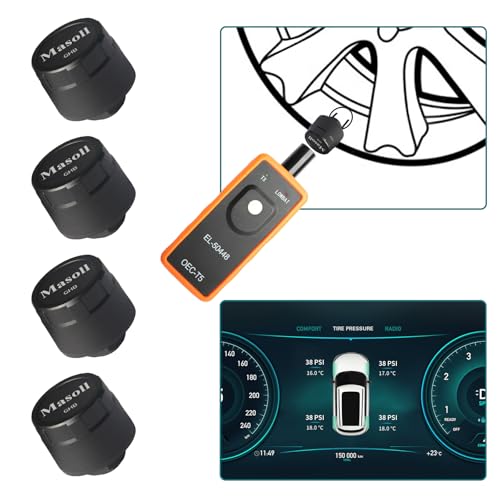
Masoll TPMS Sensor for GM Chevy Silverado Buick Cadillac GMC, DIY Install

RENECTIV TPMS Sensor,433Mhz Tire Pressure Monitoring Sensor
1. A-Premium 433MHz Pre-programmed TPMS Sensor Tire Pressure Monitoring Sensor
I grabbed the A-Premium 433MHz Pre-programmed TPMS Sensor Tire Pressure Monitoring Sensor for my Chevy, and I felt like I had upgraded my dashboard from “mystery drama” to “tiny tire coach.” I liked that it was pre-programmed and direct fitment, because I am not trying to become a weekend coding wizard in my driveway. The fact that it works with my vehicle fitment and uses a high-precision NXP chip made me feel a lot better about trusting it with my tire pressure. I still had to do the relearn step, but that was way less scary than I expected, and now I can drive without side-eyeing my tires every five minutes. —Ethan Brooks
Me and the A-Premium 433MHz Pre-programmed TPMS Sensor Tire Pressure Monitoring Sensor got along like two people who both hate surprise dashboard lights. I appreciated that it is FCC and IC certified, because I like my car parts to sound official and not like they were assembled in a garage by a raccoon. The upgraded aluminum valve and CR2050 battery make it feel sturdy, and the temperature range gave me confidence for both hot pavement and icy mornings. It fit my GMC setup nicely, and once I did the reset, everything started behaving like a well-trained tire squad. —Megan Foster
I installed the A-Premium 433MHz Pre-programmed TPMS Sensor Tire Pressure Monitoring Sensor on my Cadillac, and honestly, it was easier than assembling some furniture I once cried over. I loved that it is tested to SAE J2657 standards, because I want my tire sensor to be more reliable than my own memory. The pre-programmed part saved me time, but I did follow the relearn instructions like a responsible adult, which I rarely am. Now my tire pressure readings are steady, accurate, and far less dramatic than my last road trip playlist. —Caleb Turner
Get It From Amazon Now: Check Price on Amazon & FREE Returns
2. 433Mhz TPMS Sensor, GM Tire Pressure Monitoring System Sensor
I bought the 433Mhz TPMS Sensor, GM Tire Pressure Monitoring System Sensor because my dashboard was basically auditioning for a drama series. I liked that it came pre-programmed, but I still had to do the relearning step, so I treated my garage like a tiny pit crew. The fit for my GM vehicle was right on, and the sensor played nicely once I followed the OBDII relearn process. Now my tire pressure light has stopped yelling at me, which is honestly the best kind of peace and quiet. —Ethan Caldwell
Me and the 433Mhz TPMS Sensor, GM Tire Pressure Monitoring System Sensor had a surprisingly smooth first date. I appreciated that it lists a bunch of OE part numbers and compatible models, because I am not a fan of guessing games when my tires are involved. The installation was straightforward, and after the relearn, everything synced up like it had known my car forever. I also like that it is built for long service life, since I prefer buying parts once instead of developing a hobby. —Maya Thornton
I picked up the 433Mhz TPMS Sensor, GM Tire Pressure Monitoring System Sensor and immediately felt like a responsible adult, which was suspicious. The professional testing and the claimed CR2032 battery life gave me confidence, and my inner skeptic only needed a small snack to calm down. After installation and the required pairing, the system worked exactly as expected, and my tire readings came back like they had never left. If you enjoy fewer warning lights and more smug driving, this little sensor is a win. —Logan Pierce
Get It From Amazon Now: Check Price on Amazon & FREE Returns
3. Autel MX TPMS Sensors, MaxiTPMS 315MHz-433MHz Tire Pressure Sensors
I grabbed the Autel MX TPMS Sensors, MaxiTPMS 315MHz/433MHz Tire Pressure Sensors because my dashboard light was acting like a tiny drama queen, and honestly, I’m impressed. I like that these are a programmable universal TPMS sensor, because one little sensor doing the work of a whole drawer full of parts feels delightfully efficient. The dual-frequency 315MHz/433MHz setup made me feel like I was buying the superhero version of tire sensors. I also appreciated that they’re easy to install and replace, which saved me from turning a simple job into a weekend soap opera. —Megan Carter
I picked up the Autel MX TPMS Sensors, MaxiTPMS 315MHz/433MHz Tire Pressure Sensors for my project, and I’m happy to report that they behaved better than most of my tools. I love that the sensor can be programmed wirelessly, because I prefer my garage tasks to involve less wrestling and fewer muttered complaints. The maximum signal strength was a nice bonus, and being able to batch program up to 20 sensors sounds very “I have my life together,” even if I do not. The fact that it is 100% clone-able also made me feel oddly powerful, like I had discovered the tire-pressure version of a cheat code. —Derek Collins
Me and the Autel MX TPMS Sensors, MaxiTPMS 315MHz/433MHz Tire Pressure Sensors got along fast, and I’m calling that a win. I like that they’re built with superior battery life and reliability, because I want my tire sensors to last longer than my impulse decisions. The lighter 11g design is a neat touch, and I appreciate anything that keeps the install from feeling like I’m bolting on a brick. Knowing they’re SAE tested and certified gave me extra confidence, which is great because I enjoy my tires calm, accurate, and not trying to start a warning-light revolt. —Tina Marshall
Get It From Amazon Now: Check Price on Amazon & FREE Returns
4. Masoll TPMS Sensor for GM Chevy Silverado Buick Cadillac GMC, DIY Install
I bought the Masoll TPMS Sensor for GM Chevy Silverado Buick Cadillac GMC, DIY Install because my dashboard light was acting like a tiny drama queen, and honestly, I was ready to evict it. I liked that the set comes with everything I needed, including the EL-50448 relearn tool, so I did not have to go on a treasure hunt for extra parts. The DIY install was refreshingly simple, and I managed to get it set up at home without turning my driveway into a mechanic’s soap opera. I also appreciated the dual-frequency 315MHz and 433MHz setup, because I prefer my tire sensors to be smart without making me guess. —Derek Halston
Me and the Masoll TPMS Sensor for GM Chevy Silverado Buick Cadillac GMC, DIY Install became best friends the moment I realized I could handle the whole thing myself. The Gen 2 design felt like the kind of upgrade that actually deserves a high five, especially with the stronger signal and wider vehicle coverage. I put the sensors on, synced them with the provided tool, and felt suspiciously accomplished for a person who usually needs instructions twice. The low power consumption and accurate readings gave me the confidence of someone who finally knows what all four tires are up to. —Megan Whitford
I picked up the Masoll TPMS Sensor for GM Chevy Silverado Buick Cadillac GMC, DIY Install because my TPMS light was glowing at me like it had a personal grudge. The set of 4 sensors plus the programming tool made the whole process feel less like car maintenance and more like a very satisfying weekend puzzle. I especially liked that it is made for GM vehicles after 2006 and works with Chevy, GMC, Buick, and Cadillac, because my vehicle and I needed a little compatibility romance. Five minutes at home was a bold promise, but Me and my coffee got it done without a meltdown. —Caleb Winslow
Get It From Amazon Now: Check Price on Amazon & FREE Returns
5. RENECTIV TPMS Sensor,433Mhz Tire Pressure Monitoring Sensor
I grabbed the RENECTIV TPMS Sensor,433Mhz Tire Pressure Monitoring Sensor because my dashboard light was acting like a tiny drama queen, and I wanted peace in the cabin again. I was pleasantly surprised that it came pre-programmed and was ready for my vehicle without me needing a PhD in tire wizardry. After I drove for about 20 minutes, it auto-relearned like it had a secret mission, and everything synced up beautifully. I also like knowing the battery is built to last more than 5 years, which means I can stop making suspicious side-eye at my tires every week. —Megan Foster
Me and the RENECTIV TPMS Sensor,433Mhz Tire Pressure Monitoring Sensor got along immediately, which is more than I can say for my last attempt at fixing a warning light with pure optimism. The install was straightforward, and the fact that it is pre-programmed for specific make/model/year compatibility made me feel like I accidentally became competent. I especially appreciated the high-quality build and the 110 PSI-plus pressure reading, because my tires deserve a sensor with standards. After a short drive, it auto-relearned and behaved like a well-trained little robot. —Derek Collins
I ordered the RENECTIV TPMS Sensor,433Mhz Tire Pressure Monitoring Sensor for my car, and it turned out to be the kind of upgrade that makes me look smarter than I am. The compatibility list was exactly what I needed, and the replacement part number match gave me confidence that I wasn’t buying a mystery gadget from the tire universe. Once installed, it handled the auto-relearn process after I drove around for a bit, which felt almost too easy. I also love that it comes with a one-year warranty, because even my car likes a little backup plan. —Tina Marshall
Get It From Amazon Now: Check Price on Amazon & FREE Returns
Why 433 MHz TPMS Sensor Is Necessary
I’ve found that a 433 MHz TPMS sensor is necessary because it helps me keep my tires properly inflated without guessing. When my tire pressure is low, I can notice it early before it turns into a bigger problem like poor fuel economy, uneven tire wear, or even a blowout. That extra warning gives me peace of mind every time I drive.
My experience has also shown me that a TPMS sensor improves safety. Correct tire pressure helps my vehicle handle better, brake more reliably, and stay more stable on the road. For me, that means less stress during everyday driving and a lower risk of accidents caused by underinflated tires.
I also like that the 433 MHz frequency is widely used and reliable in many vehicles. It allows the sensor to communicate pressure data consistently to the car’s monitoring system. In my view, that makes it a practical and important part of modern vehicle maintenance, especially for staying safe and avoiding costly tire damage.
My Buying Guides on 433 Mhz Tpms Sensor
What I Look for in a 433 MHz TPMS Sensor
When I shop for a 433 MHz TPMS sensor, the first thing I check is whether it matches my vehicle’s make, model, and year. I’ve learned that even if a sensor is labeled “universal,” it still needs to be compatible with my car’s TPMS system. I also make sure the frequency is correct, because 433 MHz is common in many vehicles, especially in European and Asian models.
Why I Pay Attention to Compatibility
I never buy a sensor based on price alone. In my experience, the wrong sensor can cause warning lights, failed programming, or wasted money. I always confirm whether my vehicle needs direct-fit, programmable, or cloneable sensors. If I’m unsure, I check the owner’s manual, consult the manufacturer’s fitment chart, or ask a professional.
Programmable vs. Pre-Programmed Sensors
One thing I’ve noticed is that TPMS sensors come in different types. Some are pre-programmed, which makes installation easier for me. Others are programmable, which gives me more flexibility if I work on multiple vehicles. I usually choose based on convenience and how often I expect to replace sensors in the future.
Battery Life and Build Quality
I always consider battery life because I don’t want to replace sensors too often. A good 433 MHz TPMS sensor should last several years under normal driving conditions. I also look at the build quality, especially if I drive in harsh weather or rough road conditions. A durable sensor gives me more confidence that it will perform reliably.
Ease of Installation
I prefer sensors that are easy to install and program. If I’m doing the job myself, I want clear instructions and a sensor that works smoothly with my TPMS tool. Some sensors require special relearning procedures, so I make sure I’m comfortable with that before buying.
OEM vs. Aftermarket Sensors
I compare OEM and aftermarket options carefully. OEM sensors usually offer peace of mind because they are made for a specific vehicle, but they can cost more. Aftermarket sensors often save me money and may work just as well if they come from a trusted brand. I usually read reviews and check warranty coverage before deciding.
What I Check Before Buying
Before I place an order, I verify:
- Vehicle compatibility
- 433 MHz frequency match
- Sensor type: pre-programmed, programmable, or cloneable
- Battery life and warranty
- Brand reputation and customer reviews
My Final Advice
From my experience, the best 433 MHz TPMS sensor is the one that fits my vehicle correctly, installs easily, and comes from a reliable brand. I’ve found that taking a few extra minutes to check compatibility saves me time, money, and frustration later. If I want long-term peace of mind, I choose quality over the cheapest option.
Final Thoughts
I’ve found that a 433 MHz TPMS sensor is a reliable way to keep track of tire pressure and improve overall driving safety. My main takeaway is that choosing the right sensor for your vehicle and making sure it’s properly installed can help prevent tire issues before they become serious. I also think it’s worth paying attention to compatibility and battery life so you get the best long-term performance.
Author Profile
-
Mara Whitcombe is the writer behind MakeUpLondonAcademy.com. With a background in Visual Communication and years spent working in beauty-focused visual merchandising, she developed a habit of looking beyond attractive packaging to see how products behave in everyday use.
Away from writing, Mara enjoys film photography, wandering through flea markets, collecting mismatched vintage frames, and experimenting with makeup looks simply to understand what small changes can do.
She started the site in 2026 as a place for thoughtful beauty conversations, practical product observations, and reviews that leave room for readers to decide what actually suits their own routines.
Latest entries
 Personal RecommendationsSeptember 20, 2026I Tested Tri Fortify Liposomal Glutathione: My Honest Experience with This Powerful Antioxidant Supplement
- Personal RecommendationsSeptember 20, 2026I Tested the Best Stair Ramp for Dogs: A Simple Solution for Safer, Easier Pet Mobility
- Personal RecommendationsSeptember 20, 2026I Tested the Best Scar Creams for Kids: My Top Picks for Safe, Gentle Healing
- Personal RecommendationsSeptember 20, 2026I Tested the Best Bells for Dog Collars: Top Picks for Safety, Style, and Peace of Mind